When you are about to move out and are concerned about inspections, deposits, and having to scrub everything at the last moment, The Ultimate End-of-Tenancy Cleaning Checklist is exactly what you need.
The process of moving is stressful in itself, but the end-of-tenancy cleaning creates a new layer of stress. This guide is composed in a way that you will immediately feel relieved, as you will know what you need to do, what you need to clean and how not to lose money. Whether you’re dealing with move-out cleaning and carpet cleaning, trying to estimate deep cleaning house cost, or simply wanting the best end-of-tenancy cleaning results, this checklist will walk you through everything in a simple, easy-to-follow way.
Why a Dedicated End of Tenancy Cleaning Checklist Matters?
The expectations of the landlords are very high today. Although you may have maintained the premises in fairly good order, the standards of end-of-tenancy cleaning now stand at a professional level. The majority of the deposit wrangles occur due to inadequate cleanliness, lost corners, dirty carpets, or forgotten appliances.
That is where The Ultimate End-of-Tenancy Cleaning Checklist will be your survival tool. It helps you:
- Avoid paying high deductions
- Minimise deep cleaning house expenses.
- Manage your relocation effectively.
- Decide whether DIY move-out cleaning or hiring professionals is better
- Create an impact on landlords and property agents
And yes, it covers everything, even those sneaky areas nobody tells you about until it’s too late.
Kitchen Cleaning Essentials
The most difficult aspect of end-of-tenancy cleaning is usually the kitchen. It is the place where the grease, food stains and limescale are deposited, and landlords are most attentive here.
Key tasks:
- Clean the oven thoroughly: Take out racks and trays, rub them down with an oven cleaner, and wipe the door glass till it is streak-free. Do not leave off the hidden ends and folds where grease does lurk. For heavily soiled ovens, professional oven cleaning can save time and prevent damage.
- Stovetop and range hood: De-grease and wipe down grease, remove burners and knobs where possible, and polish the metal or ceramic. Wipe the vent filter or change it in case it is very greasy.
- Countertops and backsplash: Clean up with a disinfectant, focusing on grout, corners and areas where crumbs gather.
- Cabinets and drawers: Empty completely, wipe inside and outside, remove any sticky residues, and polish handles.
- Sink and taps: Scrub with a mild abrasive or baking soda paste to remove stains. Polish taps and remove limescale with vinegar or a descaler.
- Appliances: Clean the fridge shelves, drawers, and seals; wipe the microwave inside and out; clean the dishwasher filter and washing machine tray if provided. Remove crumbs, old detergent, or hidden gunk.
- Floors: Sweep and mop, paying attention to corners, under cabinets, and behind appliances if movable— a thorough house cleaning makes a strong impression during inspections.
- Finishing touches: Polish stainless steel, check for fingerprints on handles, and ensure all surfaces are dry and streak-free.
Bathrooms will either impress or disappoint your landlord. Even small scum of soaps, limescale or even water spots can lead to deductions in deposits. The trick is to pursue a new, clean, and glittering appearance.
Key tasks:
- Toilet: Scrub thoroughly inside, around the rim, under the seat, and behind the base. Use a disinfectant to remove any lingering bacteria or stains.
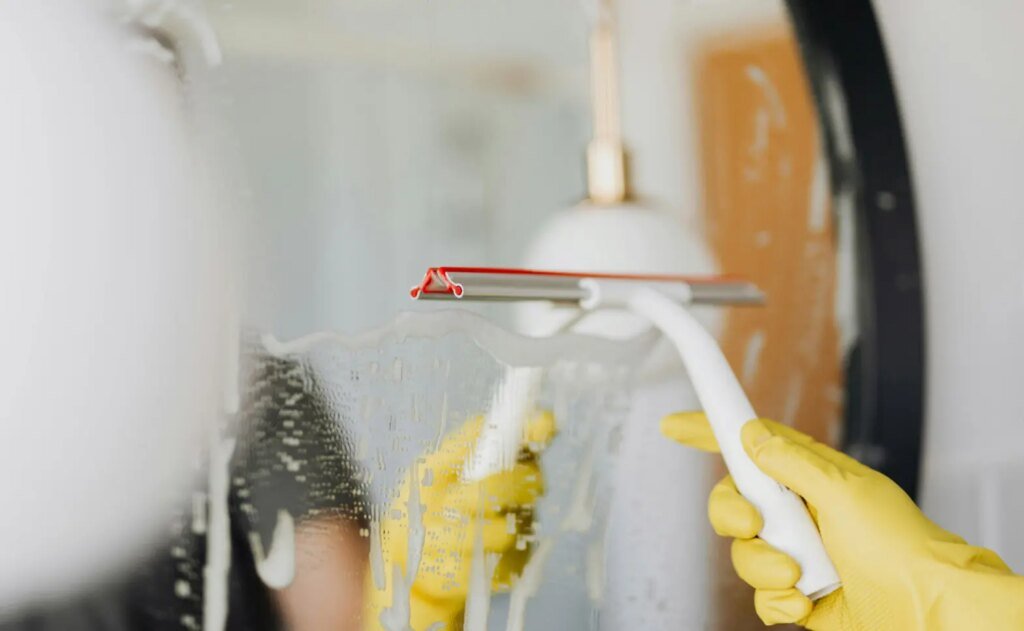
- Shower or bathtub: Remove soap scum, limescale, and mildew. Pay attention to corners, edges of the tiles, and the area around the drain. Polish glass doors until streak-free — shower glass restoration can remove stubborn water marks and limescale.
- Taps, showerheads, and fittings: Remove limescale buildup using vinegar or a limescale remover, and polish for shine. Don’t forget areas around handles or base plates.
- Sink and vanity: Clean the basin, taps, and surrounding counter. Wipe down mirrors until they reflect perfectly, and scrub grout lines to remove discolouration.
- Tiles and grout: Clean with a brush to get rid of the mould, mildew or soap. Pay attention to the corners and those places that are not visible and where grime gathers.
- Flooring and drains: Clean and disinfect with a mop. Clear drains when required and eliminate foul-smelling.
- Additional: Wash bathroom accessories, towel racks, soap dishes and toilet roll holders. Get rid of used disposable products.
Bedrooms and Living Areas
These rooms are less complex yet need to be taken care of. The idea is to make them clean, dust-free and presentable. Landlords can notice even minor stains on the walls or dusty areas.
Key tasks:
- Dusting: Dust all surfaces (shelves, skirting boards, window sills, blinds, light fixtures and corners of ceilings). It is best to use a microfiber cloth.
- Wardrobes and cupboards: Cleanse completely and inside and out, wipe out cobwebs and polish handles. Test cupboard tops and bottoms in case of dust or debris.
- Doors and frames: Wipe down door frames, door handles and doors. Look for fingerprints, scuffs, or scratches.
- Windows: Clean windows interior, wipe frames and sills, and vacuum or brush window tracks. Keep the curtains or blinds open and dust them out.
- Floors: Vacuuming, under the bed, corners, and edges. Mop or polish hard floors as necessary — residential carpet cleaning helps remove deep-set dust and stains.
- Walls and marks: Take out small stains or smudges. Apply cleaner or touch-up paint very lightly, in case it is allowed in the tenancy agreement.
- Extras: Check any built-in furniture, light switches, and outlets for dust or grime. Make sure all items are in their original place and that the room smells fresh.
Furnishings, Windows & Storage Spaces
After the cleaning of the main rooms, it is time to pay attention to furniture, windows, and storage facilities. These are the things that are easily ignored yet offer a significant difference when they are being inspected.
Key tasks:
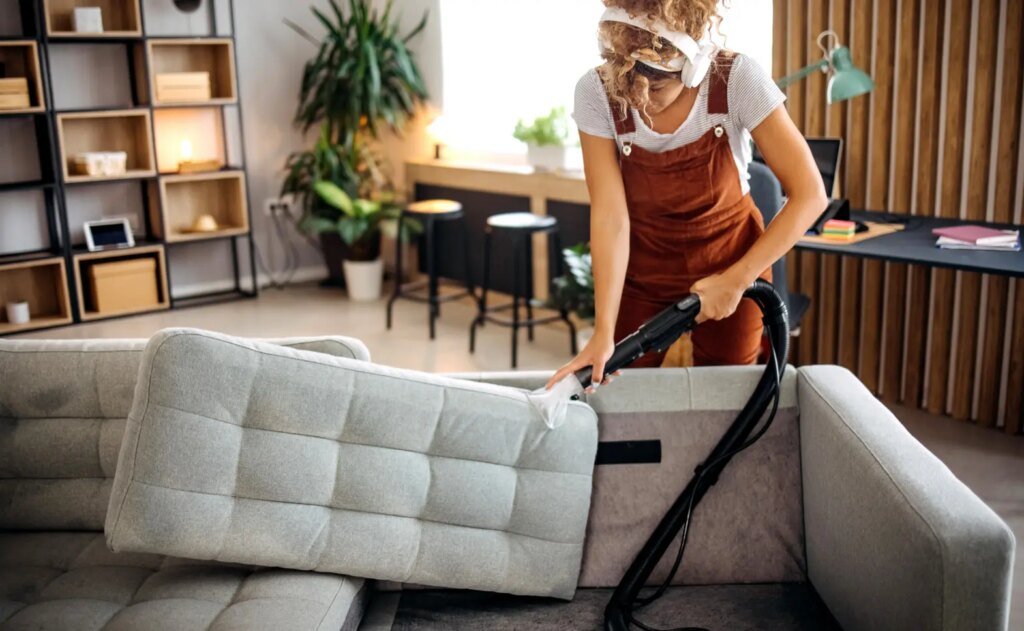
- Furnishing: Vacuum sofas, chairs, and any other upholstered furniture; polish and wipe wooden furniture; clean under and behind all furniture. Clean off the stains using upholstery cleaner and rearrange all the furniture in its position. Decorate furnishing or constructed units — upholstery cleaning refreshes fabric and removes odours
- Windows: Windows: Clean glass (when possible) both inside and out, wipe frames and sills, and dust off the blinds or curtains. A streak-free window brings light to the entire house — residential window cleaning helps achieve a streak-free finish.
- Drawers, cupboards & shelves: Clean all storage areas, get rid of dust, crumbs or hair, wipe inside and under shelves, polish handles and make everything dry and fresh-smelling. Kitchen cabinets should get additional care to eliminate grease and odours.
Carpets, Floors & Outdoor Areas
Finally, focus on floors, carpets, and any outdoor spaces. These are visible signs of cleanliness and often trigger deposit deductions if neglected.
Key tasks:
- Carpets and rugs: Vacuum slowly and thoroughly, spot-clean stains, and deodorise to remove odours. Steam cleaning can be worth it if the carpet shows heavy wear — professional carpet cleaning is often required for bond returns.
- Hard floors: Mop or polish thoroughly, reaching corners and behind furniture. Ensure no dirt or residue remains.
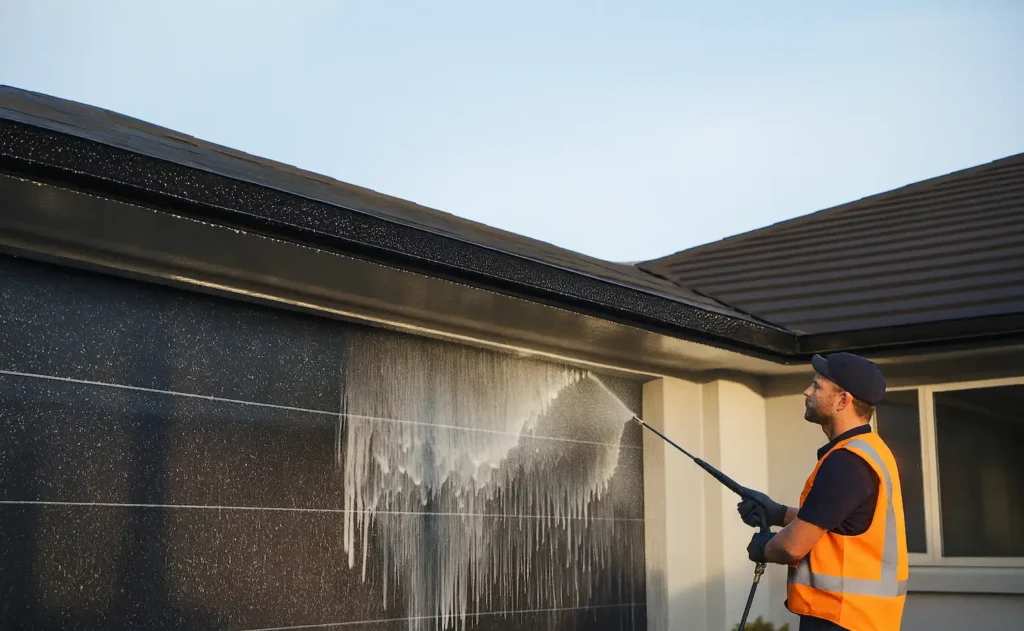
- Outdoor areas: Sweep balconies, patios, or garages. Wipe railings, clean outdoor furniture, and remove cobwebs. Empty storage sheds or bins. Even minor attention here shows care and can prevent deductions — exterior house washing improves curb appeal during inspections.
Final Tips for a Stress-Free End-of-Tenancy Clean
To make your work more productive and less stressful, a couple of additional tips will help you:
- Break down your cleaning: Do the rooms one by one so that you do not feel overwhelmed. Begin with the kitchen and bathrooms, followed by bedrooms and living spaces, and lastly storage space and outdoor space.
- Work with the right equipment: Microfiber cloths, soft brushes, non-abrasive cleaners and a good vacuum or steam cleaner can go a long way in the outcomes.
- Check your work: Take a tour of the premises as though you were the landlord. Search areas of absent spots, streaks, or odours and correct on the spot.
- Seek professional assistance where necessary: Sometimes carpets, ovens, or even strong stains cannot be removed without professional assistance. Your deposit can be saved by investing in professional cleaning.
- Record cleaning: Have a picture after completing each room. This will come to your rescue during the fight against dirtiness.
- Get organised: Have cleaning products and tools in one place, and tick off each job when you complete it. This is a systematic way to save time and not miss anything.
Final Tips for a Stress-Free End-of-Tenancy Clean
With this checklist, your end-of-tenancy cleaning will be a step-by-step process that can be handled. You can either do it yourself or employ professionals, but either way, it is important to notice the details. Whether it is kitchen appliances or window tracks, you can have a sparkling property and improve your chances of receiving a full deposit back. A tidy house is an indicator of responsibility and concern, making both you and your landlord content.