If you want to secure your home, avoid unnecessary repairs, and have your roof looking fresher over the years, it is important to understand the Dos and Don’ts of Pressure Washing a Roof.
Many homeowners assume pressure washing is simple: spray the dirt, and it disappears. But your roof is far more delicate than your driveway or patio. One wrong technique can create leaks, crack tiles, or even void your warranty. This is where the right guidance matters. With the right method, you can get rid of grime, moss and stains without causing harm to the structure that has been protecting the whole house.
Why Pressure Washing a Roof Is Not as Simple as It Looks?
Pressure washing is a cleaning technique which involves the use of high high-intensity stream of water to clean dirt, stains and accumulation on surfaces.
It works wonderfully on driveways and pavements. But a roof is different. It faces heat, rain, wind, algae, and constant exposure throughout the year, yet it is not designed to handle intense water pressure.
Many people assume that blasting the roof with high-pressure water will clean it faster. In reality, it can cause cracks, loosen shingles, strip protective layers, and even push water into the structure. And that is why the Dos and Don’ts of Pressure Washing a Roof are important. They assist you in avoiding accidents and direct you to more efficient, safer cleaning techniques that safeguard your tiles, shingles and coatings over time.
Dos and dont's of Pressure Washing a Roof
DO: Check Your Roof Type Before Washing
The first important thing in the Dos and Don’ts of Pressure Washing a Roof is to know the type of roof you have. Pressure washing, even at low settings, cannot be applicable to all roofs. Here is the simple breakdown:
- Asphalt shingles: Not to be pressure-washed. They are fragile, and the pressure causes the protective grains which protect your roof to strip away.
- Clay tiles: Pressure washing is not allowed. They are fragile and may fracture or break when compelled.
- Concrete tiles: it is only possible to clean them by using low pressure or soft washing. The pressure is too strong and forces water through the cracks, weakening them.
- Metal roofs: Can be pressure-washed carefully. But only with controlled, low pressure to avoid dents or water intrusion.
- Wood shake roofs: Do not pressure wash. The force tears fibres and accelerates rot.
Every material reacts differently. Use the wrong method, and you might reduce its life by years. Always check your manufacturer’s guidelines. Many warranties clearly state that high-pressure washing voids them. That single mistake can cost a fortune later.
DON’T: Use High Pressure on Delicate Roofs
This is the biggest rule for Pressure Washing a Roof. Never blast your roof with excessive force. High pressure strips granules from shingles. It cracks tiles. It forces water under the roofing structure. It lifts edges. It creates leaks.
A safe cleaning pressure usually ranges from 300 to 1000 PSI for most roofs. That is extremely low compared to a driveway wash. If your machine cannot be adjusted, do not use it.
DO: Use Soft Washing Instead
Soft washing is the safer, professional-preferred method. This step is one of the most important in the Dos and Don’ts of Pressure Washing a Roof.
Soft washing uses low pressure, typically under 500 PSI. It relies on a cleaning solution rather than force. It:
- Gently removes algae
- Dissolves moss
- Eliminates mould
- Breaks down lichen
- Protects tiles and shingles
This method reduces damage risks and increases cleaning effectiveness. It also keeps your roof clean for a longer period compared to blasting it with water.
DON’T: Clean Without Protective Gear
Safety is a critical part of the Dos and Don’ts of Pressure Washing a Roof. Roofs are slippery when wet. Cleaning chemicals can irritate eyes and skin. Always wear:
- Nonslip shoes
- Gloves
- Safety goggles
- Long sleeves
- A secure harness
One slip can lead to serious injury. Never climb on a roof when it is raining or windy.
DO: Clear Loose Debris Before Washing
Before washing, remove branches, leaves, and dry debris. This simple step is often skipped, but it plays a major role. Loose debris blocks water flow. It hides damaged spots. It causes streaks and uneven cleaning. Use a soft broom or a leaf blower. Never drag heavy tools across the surface.
DON’T: Ignore Moss and Algae Growth
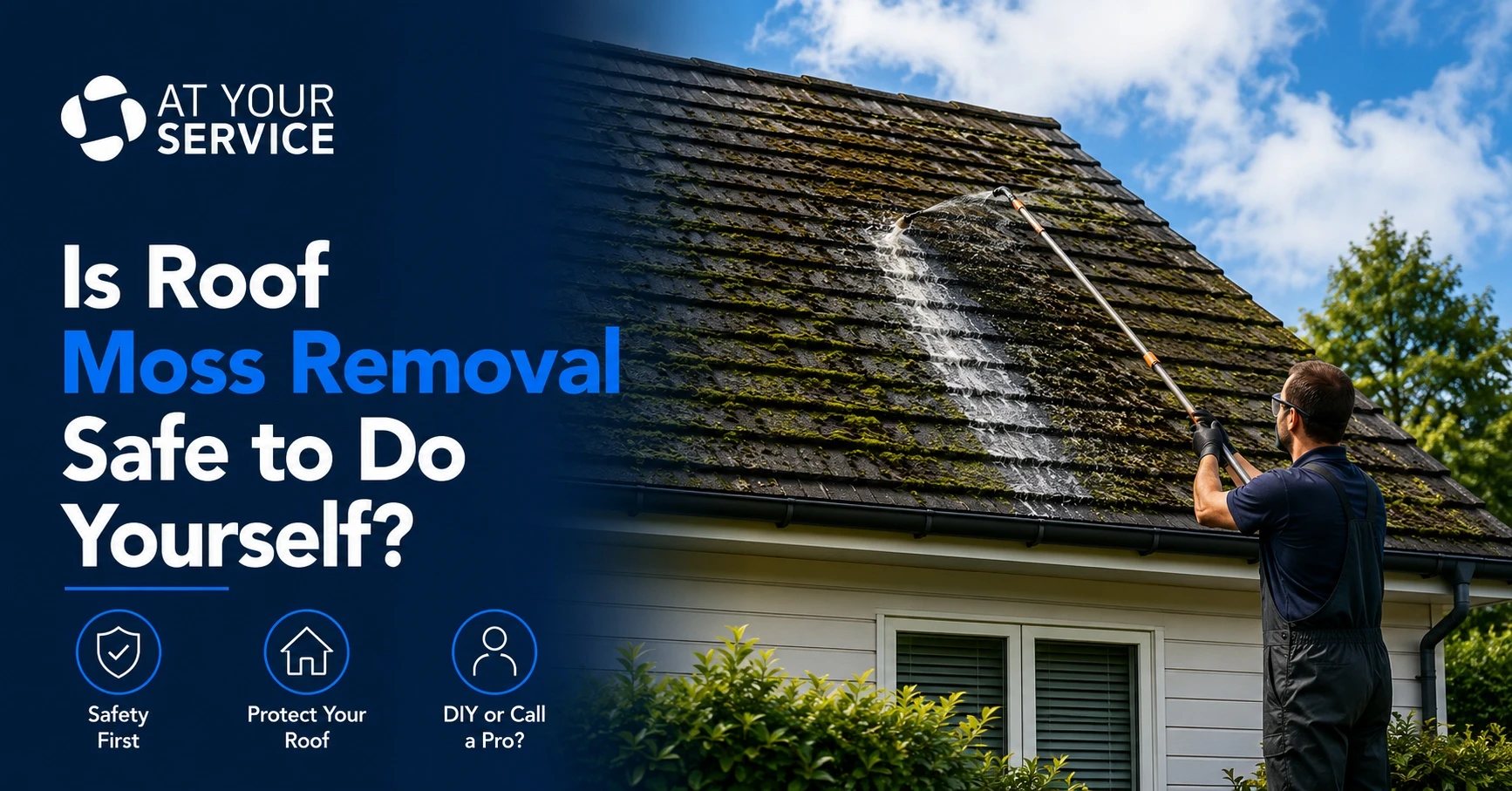
Moss and algae eat into roofing materials. They trap moisture. They weaken structural integrity. One major rule in Pressure Washing a Roof is to never ignore biological growth. Treat it early. Soft wash it. Apply a follow-up biocide if necessary. Early treatment prevents expensive replacements in future.
DO: Protect Gutters and Surrounding Areas
When washing your roof, runoff water carries dirt, algae, and chemicals. Another important point in the Dos and Don’ts of Pressure Washing a Roof is protecting your property. Cover plants, garden beds, and outdoor furniture. Clear gutters so water flows freely. If the runoff sits too long, it can stain walls or flood areas around the house.
DON’T: Spray Upward or Against Overlaps
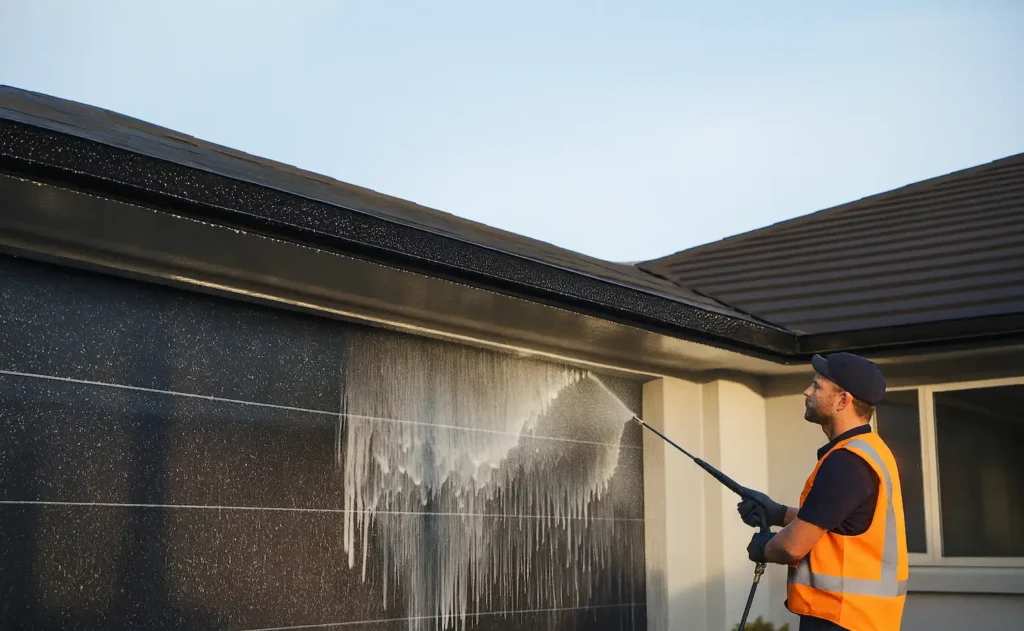
Water should always flow downward, just like rain. Spraying upward forces water under shingles or tiles. This is a major violation of the Dos and Don’ts of Pressure Washing a Roof and can cause hidden leaks. Always direct the spray downward with gentle pressure.
DO: Inspect for Damage Before and After Cleaning
The smart Dos and Don’ts of Pressure Washing a Roof also includes inspection. Look for:
- Cracked tiles
- Loose shingles
- Exposed nails
- Damaged flashing
- Rust on metal roofs
Record pre- and post-cleaning photos. This assists in determining the changes and avoiding disputes with the contractors or insurance organisations.
DON’T: Forget to Rinse Cleaning Solutions Properly
When you apply the cleaning solution, do not forget to wash it off. Unutilized chemicals may be staining. They are able to make some materials weak. Some may harm plants or pets. Washing cleaning solutions is, therefore, a very important guideline in the Dos and Don’ts of Pressure Washing a Roof.
DO: Hire Professionals If Unsure
Roof cleaning is risky. If you lack equipment, experience, or confidence, call professionals. They understand all the Dos and Don’ts of Pressure Washing a Roof. They use calibrated equipment. They adhere to precautionary measures. They are familiar with the way to preserve weak materials. Professional cleaning may increase the life of your roof as well as keep your warranty.
DON’T: Rush the Process
Patience matters. Rushing leads to mistakes. It causes uneven cleaning. It increases the chance of slips. Slow cleaning is safer and more effective. This is a subtle but vital part of the Dos and Don’ts of Pressure Washing a Roof.
Final Thoughts
Knowing the Dos and Don’ts of Pressure Washing a Roof protects your home, your money, and your safety. Roofs are expensive. Repairs are stressful. But cleaning them correctly can preserve their strength for years. Use low pressure. Follow safety steps. Treat algae early. Avoid shortcuts. And, not knowing what to do, call a professional.
A clean roof is not supposed to be damaged or dangerous. These tips will keep your roof healthy and provide you with a home that is as good as it looks.