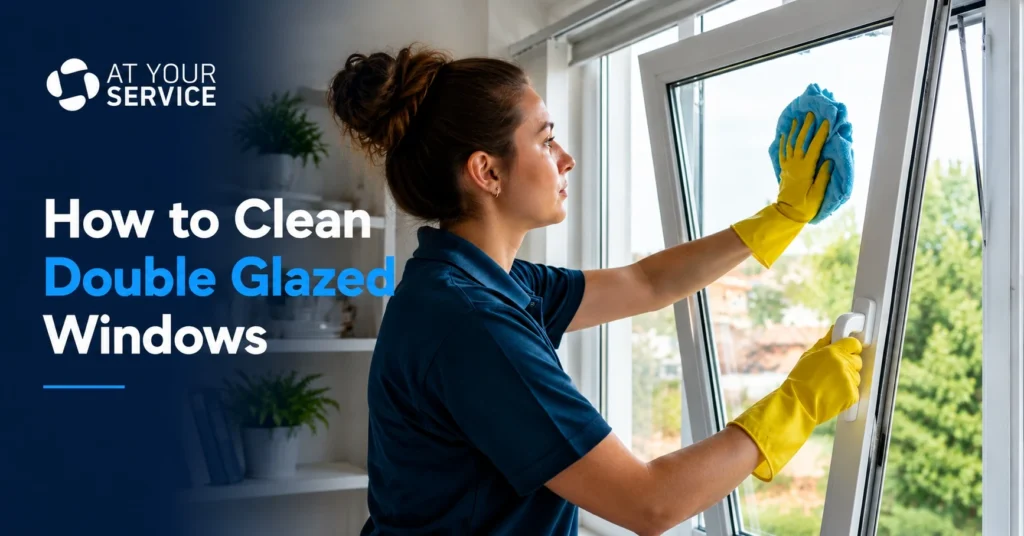
How to clean double glazed windows depends on which part needs attention. The glass is cleaned the same way as any window, with a vinegar solution and a squeegee. The uPVC or aluminium frame needs a gentler approach using warm soapy water. The rubber seals need the gentlest treatment of all, since the wrong product can degrade them. If there’s moisture or fogging trapped between the two panes, no cleaning method fixes that, because it means the seal has failed.
In this guide, you’ll learn how to clean double glazed windows properly, covering the glass, frames, and rubber seals, what causes condensation and fogging, the real difference between a humidity problem and a seal failure, and when professional help is the only option.
Quick Answer: Vacuum loose dust from frames and sills first. Clean the glass with a 1 to 2 vinegar and water solution, squeegee top to bottom, and buff dry with microfibre. Clean uPVC or aluminium frames with warm soapy water only. Wipe rubber seals with a damp cloth, never with vinegar or harsh chemicals. If you see fogging or moisture between the panes rather than on the surface, this means the seal has failed and the glass unit needs replacing, not cleaning.
Surface Condensation vs Seal Failure
This is the single most important thing to understand before cleaning a double glazed window, and it’s where most online advice gets it wrong.
| Sign | What It Means | Can Cleaning Fix It? |
| Droplets on the inside surface in the morning | Indoor humidity meeting a cold glass surface | No, this needs ventilation and heating, not cleaning |
| Light mist on the outside surface | Normal Low E coating performance | No fix needed, it clears on its own |
| Fogging or haze between the two panes | Seal failure, moisture trapped inside the unit | No, cleaning cannot reach inside a sealed unit |
| Water stains or mineral marks inside the unit | Long term seal failure | No, glass unit replacement is required |
| General dust or grime on the glass surface | Normal dirt accumulation | Yes, standard cleaning resolves this |
| Yellowing or dullness on the frame | uPVC ageing or sun exposure | Yes, with the right frame cleaning method |
If your problem is genuinely between the panes, skip ahead to the condensation and fogging section. If it’s on the surface, the cleaning steps below will fully resolve it.
How to Clean Double Glazed Windows (The Glass)
The glass itself is cleaned using the same effective method as any window, but a little extra care helps protect the seals around the edge of the unit.
Step 1: Remove Loose Debris First
Use a vacuum cleaner with a brush attachment to remove any loose dirt, dust, or cobwebs from the window surface and frame before applying any liquid. This prevents scratching the glass when you start wet cleaning.
Step 2: Apply Your Cleaning Solution
A solution of water and white vinegar applied with a soft cloth or spray bottle works well on double glazed glass. A 1 part vinegar to 2 parts water ratio is the standard, eco-friendly mix for both inside and outside glass.
Spray the solution evenly across the pane. Avoid spraying directly and heavily onto the edges where the glass meets the frame, since pooled liquid there can work its way toward the seal over time.
Step 3: Wipe and Squeegee
Work top to bottom in overlapping strokes. Use a squeegee to remove excess water and dry with a microfibre cloth for a streak-free finish. Wipe the squeegee blade after every pass to avoid transferring grime back onto clean glass.
Step 4: Avoid Direct Sunlight
Don’t clean windows in direct sunlight, since the heat causes the cleaner to dry too fast, which leads to streaks. An overcast NZ day gives the best result.
In our experience cleaning double glazed homes across New Zealand, the most common mistake we see is people scrubbing hard at the edges where dust collects against the frame seal. Gentle pressure with a soft cloth in that specific area, rather than firm scrubbing, protects the seal and still removes the build up effectively.
How to Clean Double Glazed Window Frames
Frame material determines what’s safe to use. uPVC is the most common frame type in NZ double glazing, alongside aluminium and timber.
uPVC Frames
Wipe down with a damp cloth to remove loose dust and dirt. Use a glass cleaner or a solution of water and white vinegar applied with a soft cloth, then buff dry with microfibre or newspaper.
For tougher stains such as bird droppings or mildew, mix one part white vinegar with three parts water in a spray bottle. Spray onto the stain, let it sit for 10 minutes, then wipe clean with a soft cloth. The acidity of the vinegar breaks down stains without damaging uPVC.
What to avoid on uPVC frames:
Avoid harsh chemicals such as bleach, ammonia, or acetone, which can discolour and weaken uPVC. Abrasive cleaners and scouring pads should also be avoided, as they scratch the surface. High pressure washers can force water into the seals and glazing, leading to leaks and damp issues. Clean gently using a hand held spray bottle or bucket of water instead.
Aluminium and Timber Frames
Aluminium frames clean well with the same warm soapy water approach used for uPVC. Avoid abrasive pads, which can scratch the powder coating. For timber frames, stick to a barely damp cloth and avoid soaking the wood, particularly around joints where water can cause swelling over time.
How Often Should You Clean Double Glazed Window Frames?
A quick wipe down every 2 to 3 months removes dust and light grime. A deep clean every 6 months handles stubborn stains and weather build up. Coastal NZ homes exposed to salt air should lean toward the more frequent end of that schedule, since salt accelerates frame dulling and seal wear.
How to Clean Rubber Seals on Double Glazed Windows
The rubber seals around double glazed units require the gentlest treatment of anything on the window, and this is where many well-meaning DIY methods cause unintended damage.
Warm soapy water is enough to keep window seals clean. It’s important that seals don’t come into contact with chemicals, no matter how mild they seem, since this can cause the seals to peel over time.
The go to mixture of vinegar and water that works well on glass and frames won’t work for the seals, as the acidity can actually degrade rubber when applied directly.
This is an important correction to a lot of generic window cleaning advice online, which often recommends vinegar across every part of the window. For seals specifically, stick to plain warm water with a small amount of mild dish soap, nothing stronger.
Step by step seal cleaning:
- Use a soft bristled paintbrush to remove dust from hard to reach areas around the seal.
- Wipe the seal gently with a cloth dampened in warm soapy water.
- Use a cloth that matches the colour of your frame, since different coloured cloths can leave stains.
- Never use wire wool or a scouring brush on the seals, as this can leave scratches and damage the rubber’s integrity.
- Dry with a clean cloth once finished.
Why this matters beyond appearance:
Removing dust and condensation from seals is also important for health reasons. Left unaddressed, seals can become mouldy over time, which is harder to clean and can contribute to respiratory issues.
Condensation on Double Glazed Windows
This topic generates more confusion than any other part of double glazed window care, so it’s worth explaining properly.
Why You Still Get Condensation Despite Double Glazing
Double glazing raises the surface temperature of the inside pane, which helps reduce condensation, but it doesn’t make the problem disappear entirely. If indoor humidity is high enough, or the room cools enough overnight, you’ll still see water on the inside of double glazed windows. The glazing isn’t faulty in this situation. The expectation that double glazing eliminates condensation entirely was simply wrong.
Many NZ homeowners discover this in their first winter after upgrading to double glazing and assume something is wrong. Condensation on the inside of window panes is a sign of excess humidity in the home, not a fault with the glazing itself.
Condensation on the Outside Surface
Condensation on the outside of the window actually indicates the Low E coating is working effectively. This special coating traps heat inside the home. The temperature difference between the warm interior and the cooler exterior, combined with humidity, causes moisture to condense on the outer pane. This is temporary and the window is designed to handle it. The condensation simply drains off the outside surface on its own. If it bothers you visually, a gentle squeegee wipe clears it instantly and causes no harm.
How to Clear Condensation from Inside the Room (Surface, Not Between Panes)
If condensation appears on the room-facing surface of the inside pane, this is a humidity issue, fully fixable through ventilation and heating, not cleaning products.
Ensure proper ventilation in bathrooms and kitchens, especially during moisture producing activities like showering or cooking. Use a dehumidifier to remove excess moisture from the air. Maintain a consistent indoor temperature above the dew point to prevent condensation forming in the first place.
The two effective levers are reducing indoor humidity through ventilation and source control, and raising surface temperatures through whole home heating that runs continuously rather than cycling on and off. Quick fixes treat the symptom. Addressing both factors fixes the actual cause.
No, vinegar does not help with this type of condensation. Vinegar doesn’t change the surface temperature of the glass or the humidity of the air, so it doesn’t address either driver of condensation.
Fogging or Moisture Between the Panes
This is where it’s critical to understand the distinction. If moisture, fogging, or haze appears trapped between the two glass panes rather than on a surface you can touch, this is not a cleaning problem.
When the seal between the panes fails, moisture enters the sealed space, leading to a foggy or cloudy appearance, reduced visibility, and potential damage to the window frame over time. Seal failure occurs due to age, manufacturing defects, improper installation, or repeated temperature fluctuations that cause materials to expand and contract over the years.
This is an indicator that the seal has failed, not a humidity issue, and it requires the unit to be replaced.
We want to be direct here, because some generic advice circulating online suggests drilling holes into the glass unit or using hair dryers and WD-40 to dry out moisture trapped between panes. Drilling holes into a double glazed unit can cause permanent damage and is not recommended. These methods may temporarily reduce visible fogging but do not repair the failed seal, and the moisture returns. A failed seal genuinely requires glass unit replacement, performed by a qualified glazier.
Removing Haze and Light Scratches from Double Glazed Glass
How to Remove Haze from a Double Pane Window
Mix a solution of equal parts vinegar and water in a spray bottle. Spray the solution onto the interior side of the window, focusing on the hazy areas, then wipe clean. This works for surface haze caused by mineral build up or cleaning product residue. It will not resolve haze caused by a failed seal between the panes, which requires replacement as covered above.
Removing Light Scratches
For light scratches, non-abrasive solutions such as iron oxide or cerium oxide can be applied to a cloth and gently worked into the scratch until it fades. Deeper scratches or chips in the frame where paint has come away are much harder to fix and generally require professional attention.
What Causes Double Glazing to Go Cloudy?
This question comes up frequently, and the answer ties together everything covered above. Cloudiness has two distinct causes that look similar but require completely different responses.
Surface cloudiness comes from mineral deposits, dust film, or product residue sitting on the glass itself. This is fixed with the standard cleaning method covered earlier in this guide.
Between-pane cloudiness comes from seal failure allowing moisture into the sealed unit. The most common sign is a foggy or cloudy appearance between the panes, occurring when water vapour gets trapped within the sealed space and condenses into liquid form. Frost or ice formation between the panes can also occur in cold weather, which stresses the seals and frames further. This requires unit replacement.
A simple test distinguishes the two.
Try wiping the haze with a cloth on the interior surface. If it clears, it’s surface residue. If you can’t physically reach the haze with a cloth because it’s visibly trapped between two layers of glass, the seal has failed.
Frequently Asked Questions
Is there a way to clean inside a double glazed window?
You cannot access the space between the two sealed panes without breaking the seal, which would void the insulation properties and likely require professional repair. If you’re seeing dirt or moisture between the panes, this means the seal is already broken and the appropriate response is professional assessment, not attempting to clean inside the sealed unit yourself.
How do you clean double glazed windows without streaks?
Use a 1 part vinegar to 2 parts water solution on the glass, applied with a spray bottle. Wipe top to bottom using a squeegee, cleaning the blade after every pass, then buff the edges dry with a microfibre cloth. Clean on an overcast day rather than in direct sunlight to prevent the solution drying too quickly.
How do I clear condensation from inside double glazing?
If the condensation is on the room facing surface of the glass, improve ventilation, run a dehumidifier in high humidity rooms, and maintain consistent indoor heating. If moisture has built up between the panes themselves rather than on a surface, a dehumidifier placed near the window for a few hours can sometimes reduce minor internal moisture, but persistent fogging between panes indicates a failed seal that requires professional repair or unit replacement.
Should double glazing get condensation on the inside?
Light, occasional condensation on the inside surface during cold mornings is normal and not a fault. Persistent, heavy condensation signals that indoor humidity and surface temperatures are mismatched, which can lead to mould growth, frame issues, and respiratory health risks if left unaddressed. Condensation trapped between the two panes themselves is never normal and indicates seal failure.
Will white vinegar damage uPVC?
No, when used correctly. A solution of one part white vinegar to three parts water is safe and effective on uPVC for removing stains, hard water marks, and mildew. Avoid using vinegar directly on rubber seals, since the acidity can degrade rubber over time with repeated use.
Does WD-40 clean uPVC?
A small amount of light oil such as WD-40 can be used on the moving parts of uPVC windows, such as hinges and locks, to keep them lubricated. It is not a glass or frame cleaner and should not be sprayed onto glass or seals, where it can leave residue and attract dust.
What is the best product for cleaning double glazing?
For glass, a simple vinegar and water solution outperforms most commercial sprays without leaving residue. For uPVC frames, warm water with mild dish soap handles routine cleaning, with diluted vinegar reserved for stubborn marks. For rubber seals, plain warm soapy water only, with no vinegar or other acidic products.
How often should homeowners clean their double glazed windows?
A quick wipe down every 2 to 3 months keeps frames and glass free of dust and light grime, with a deeper clean every 6 months for stubborn marks and weather build up. Homes in coastal or high pollution NZ areas benefit from cleaning toward the more frequent end of this range due to faster salt and grime accumulation. New Zealand Legislation
Can you reseal double glazed windows?
In some cases, yes. A glazier can assess whether the seal failure is isolated enough to reseal the existing glass unit or whether the unit needs full replacement. This is a professional glazing decision based on the extent and age of the seal damage, not something that can be determined or repaired through cleaning.
Is there a way to clean inside a double glazed window?
You cannot access the space between the two sealed panes without breaking the seal, which would void the insulation properties and likely require professional repair. If you’re seeing dirt or moisture between the panes, this means the seal is already broken and the appropriate response is professional assessment, not attempting to clean inside the sealed unit yourself.
How do you clean double glazed windows without streaks?
Use a 1 part vinegar to 2 parts water solution on the glass, applied with a spray bottle. Wipe top to bottom using a squeegee, cleaning the blade after every pass, then buff the edges dry with a microfibre cloth. Clean on an overcast day rather than in direct sunlight to prevent the solution drying too quickly.
How do I clear condensation from inside double glazing?
If the condensation is on the room facing surface of the glass, improve ventilation, run a dehumidifier in high humidity rooms, and maintain consistent indoor heating. If moisture has built up between the panes themselves rather than on a surface, a dehumidifier placed near the window for a few hours can sometimes reduce minor internal moisture, but persistent fogging between panes indicates a failed seal that requires professional repair or unit replacement.
Should double glazing get condensation on the inside?
Light, occasional condensation on the inside surface during cold mornings is normal and not a fault. Persistent, heavy condensation signals that indoor humidity and surface temperatures are mismatched, which can lead to mould growth, frame issues, and respiratory health risks if left unaddressed. Condensation trapped between the two panes themselves is never normal and indicates seal failure.
Will white vinegar damage uPVC?
No, when used correctly. A solution of one part white vinegar to three parts water is safe and effective on uPVC for removing stains, hard water marks, and mildew. Avoid using vinegar directly on rubber seals, since the acidity can degrade rubber over time with repeated use.
Does WD-40 clean uPVC?
A small amount of light oil such as WD-40 can be used on the moving parts of uPVC windows, such as hinges and locks, to keep them lubricated. It is not a glass or frame cleaner and should not be sprayed onto glass or seals, where it can leave residue and attract dust.
What is the best product for cleaning double glazing?
For glass, a simple vinegar and water solution outperforms most commercial sprays without leaving residue. For uPVC frames, warm water with mild dish soap handles routine cleaning, with diluted vinegar reserved for stubborn marks. For rubber seals, plain warm soapy water only, with no vinegar or other acidic products.
How often should homeowners clean their double glazed windows?
A quick wipe down every 2 to 3 months keeps frames and glass free of dust and light grime, with a deeper clean every 6 months for stubborn marks and weather build up. Homes in coastal or high pollution NZ areas benefit from cleaning toward the more frequent end of this range due to faster salt and grime accumulation. New Zealand Legislation
Can you reseal double glazed windows?
In some cases, yes. A glazier can assess whether the seal failure is isolated enough to reseal the existing glass unit or whether the unit needs full replacement. This is a professional glazing decision based on the extent and age of the seal damage, not something that can be determined or repaired through cleaning.
When Calling a Professional Is Mandatory
DIY cleaning resolves the vast majority of double glazed window issues including dust, grime, surface haze, and light frame marks. It cannot resolve a failed seal, and persisting with DIY attempts in that situation wastes time without addressing the actual problem.
Call a professional glazier when:
- Moisture, fogging, or staining is visible between the two panes rather than on a touchable surface
- Condensation between panes persists or worsens despite no change in indoor humidity
- Ice or frost forms between the panes during winter
- A window has been physically impacted and the seal integrity is in question
For routine glass and frame cleaning that keeps double glazed windows performing and looking their best between any necessary glazing repairs, our guide on how to clean windows without streaks covers the full method in more depth, and our professional window cleaning service handles the regular maintenance side so seal issues are caught early rather than discovered after months of fogging.