How to clean outside windows without streaks depends on the height of the windows and how dirty they are. For ground-floor exterior windows, a squeegee, mild dish soap solution, and good technique gets a streak-free result every time. For second-floor windows or any glass you can’t safely reach, a telescopic water fed pole from the ground is the safest and most effective option. Using a ladder to reach sideways is the most common cause of falls during DIY window cleaning in New Zealand.
In this guide, you’ll learn how to clean outside windows step by step, covering tools, the right cleaning solution, the correct technique, how to clean outside windows you can’t reach, how to tackle hard water stains and stubborn marks, and when professional cleaning makes more sense than doing it yourself.
Quick Answer: Choose a cloudy day. Pre-rinse with a hose to loosen grime. Apply dish soap and warm water with a scrubber or mop head. Squeegee top to bottom, wiping the blade after every pass. Buff edges dry with a microfibre cloth. For second-floor windows, use a telescopic extension pole from the ground rather than a ladder.
Tools and Method by Situation That You’ll Need
| Situation | Tools Needed | Best Method |
| Ground-floor, light dust | Spray bottle, microfibre cloth | Vinegar and water, wipe with cloth |
| Ground-floor, heavier grime | Bucket, scrubber, squeegee | Dish soap solution, squeegee finish |
| Second-floor, reachable with pole | Telescopic pole, squeegee head, scrubber head | Dish soap from ground, squeegee from ground |
| Second-floor, water fed pole | Water fed pole system | Purified water only, brush and rinse |
| Apartment, exterior pane inaccessible | Magnetic window cleaner | Clean inside pane, magnetic tool cleans outside simultaneously |
| Hard water stains or mineral build-up | Vinegar, non-scratch sponge | Soak affected area, then standard clean |
| Post-construction residue or paint spots | Razor blade scraper (wet glass only) | Scrape at 45 degrees, then full clean |
Best Time and Conditions to Clean Outside Windows in NZ
Choose a calm, cloudy day to avoid accidents and ensure you have enough time to rinse and dry windows thoroughly. Direct sunlight causes soap and cleaning solutions to dry too quickly, leaving streaks or spots on the glass before you can squeegee them off.
Clean outside windows on an overcast day, since direct sun dries the solution too fast and leaves streaks on large exterior panes.
In NZ, the best windows for cleaning are autumn mornings when temperatures are moderate, skies are typically overcast, and wind is minimal. Spring works equally well. Avoid mid-summer afternoons in direct sun and any day with strong wind, which dries glass unevenly and creates safety issues on extension poles.
Does rain clean windows?
Not effectively. Rain removes loose dust but leaves behind mineral deposits from the water itself. Regular professional or DIY cleaning is still necessary even if rain is frequent.
Tools for Cleaning Outside Windows
The right tools make the difference between a streak-free result and an hour of frustration.
Squeegee.
A squeegee with a sharp rubber blade is the most important tool for streak-free results. Replace the blade when it starts leaving lines. A 30cm to 35cm squeegee covers exterior panes efficiently. Smaller ones suit residential windows better than large professional-width tools.
Scrubber or mop head.
A scrubber or mop applies solution across the glass. Use a soft brush for corners and frames where a squeegee can’t reach.
Microfibre cloths.
Essential for detailing edges and corners after squeegeeing. Microfibre cloths are highly absorbent and effective at picking up dirt without leaving fibres behind, ensuring a spotless clean.
Extension or telescopic pole.
When you have to clean interior or exterior windows that are well above ground floor height, you extend the handle to the proper length. Some telescopic poles can safely reach second-floor windows from the ground below.
Garden hose with adjustable nozzle.
Spray both the windows and the surrounding area to help remove debris and dirt from the glass surface before applying any cleaning solution. This pre-rinse step is particularly important for NZ homes with pollen, dust, or coastal salt deposits on exterior glass.
Two-bucket system.
Using a two-bucket system helps avoid spreading dirt and grime. Fill one bucket with clean, soapy water and the other with clean water for rinsing. Dip your scrubber in the soapy water, scrub the window, then rinse it in the clean water before dipping it back.
Best Cleaning Solution for Outside Windows
Exterior windows accumulate different soiling from interior glass: pollen, bird droppings, coastal salt film, exhaust residue, and UV-baked grime. The solution needs to cut through these effectively without leaving residue.
Dish soap and warm water is the best all-round solution for cleaning outside windows. After soaking your sponge or brush in hot soapy water, you can start scrubbing your windows. Use 2 to 4 drops of mild dish soap per 4 litres of warm water. The water should feel slightly slippery, not soapy or foamy. Too much soap is the most common cause of streaky exterior windows.
Vinegar and water works best for exterior glass with hard water staining or mineral deposits. Use a 1 to 3 ratio of white vinegar to water for stubborn mineral build-up, applied directly to the affected area and left for 5 minutes before scrubbing. For general exterior cleaning, a 1 to 10 ratio is sufficient.
Do not mix vinegar and dish soap. As covered in our best window cleaning solution guide, the soap neutralises the acid in vinegar, reducing the effectiveness of both. Use one or the other depending on the job.
For detailed homemade recipes and the professional solution breakdown, the best window cleaning solution guide covers every situation with exact ratios.
How to Clean Outside Windows?
Step 1: Prepare and Pre-Rinse
Remove any window screens and set them aside. Begin by removing blinds or drapes from the inside if needed. Vacuum cobwebs and debris from the edges of the window frame before applying any moisture.
Then pre-rinse the glass and surrounding frame with a garden hose. Spraying both the windows and the surrounding area helps remove debris and dirt from the surface of the window before cleaning begins.
In our experience cleaning exterior windows across NZ homes, skipping the pre-rinse is the single most common reason a clean takes twice as long as it should. Dry dust mixed with cleaning solution creates a muddy residue that spreads across the glass instead of lifting off it.
Step 2: Apply the Cleaning Solution
Apply your dish soap solution to the glass using a scrubber, mop head, or sponge. Work from top to bottom. Focus on spots with stubborn dirt and grime. Continuously rinse your brush or sponge in soapy water to keep it clean and effective throughout the cleaning process.
Keep the entire glass surface wet while you work. Keep the surface wet across larger panes and avoid letting any section dry mid-clean, since dried solution on exterior glass causes the worst streaking of all.
Step 3: Squeegee Top to Bottom
Start at the top of the window and pull the squeegee down in a top-to-bottom motion. Using firm but gentle pressure, continue working down the window to remove excess water. Wipe the blade of the squeegee after every pass with a clean cloth.
Pull the squeegee in overlapping passes, wiping the blade with a clean cloth after each stroke to stop residue smearing back onto the glass.
The blade-wipe step is the one most people skip. A squeegee blade that carries dirty water from the previous pass deposits it as a streak on the next. This single habit change improves results more than switching cleaning products.
Step 4: Dry Edges and Detail Frames
Finish the edges and the bottom rail with a dry microfibre cloth, where runoff collects on outdoor frames.
Work along the full perimeter of each pane. Water pooling at the bottom corner of a window is the most common source of the one streak that appears after an otherwise perfect clean.
Step 5: Check in Raking Light
Stand at an angle to the window so light crosses the surface. This reveals any remaining streaks invisible from straight on. Buff any remaining marks with a dry microfibre cloth.
How to Clean Outside Windows You Can’t Reach
This is the most searched and most mishandled aspect of exterior window cleaning. It is also where most DIY injuries happen.
How to Clean Second-Floor Outside Windows Without a Ladder
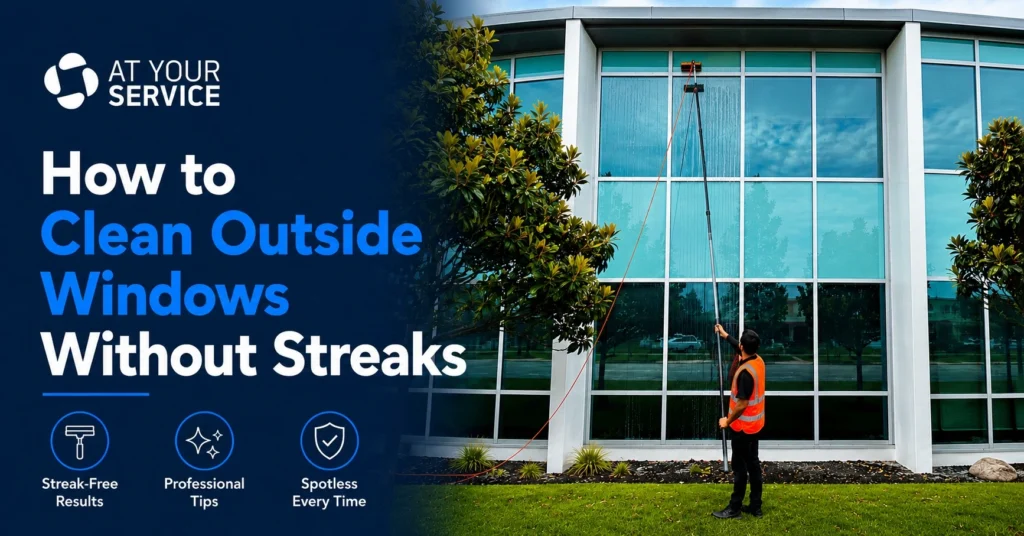
Wherever possible, clean from the ground using a telescopic pole fitted with a washer and squeegee, or a water-fed pole that scrubs and rinses with purified water for a spot-free finish without detergent. Poles extend from around 1.5 to 8 metres, covering most two-storey homes from the ground.
Upper-storey and hard-to-reach windows are best done with a water-fed pole or by a professional with the right gear, which is both safer and gives a cleaner finish than stretching off a ladder.
Telescopic extension poles with scrubber and squeegee heads are available from NZ hardware stores. For the majority of two-storey homes, a 5 to 6 metre pole reaches second-floor windows safely from the ground without any ladder required.
How to Clean Outside Windows from Inside an Apartment
For apartment dwellers where exterior access is not possible, two practical options exist.
Magnetic window cleaners work on double-pane glass. One magnetic pad sits on the inside of the glass and the other on the outside. Moving the inside pad magnetically drags the outside pad across the glass simultaneously. Magnetic window cleaners are perfect for double-paned windows and allow apartment residents to keep their exterior windows spotless without leaning out of the frame.
Cleaning the inside of the outer pane through the window frame. Many double-hung and casement windows allow you to tilt or swing the outer sash inward, giving full access to the exterior glass surface from inside the apartment. Check your window hardware before assuming exterior access is impossible.
The Safety Reality of Ladders and High Windows
The honest line is about height. Upper-storey windows, anything over a single level, or glass above a deck or a drop, are where people get hurt, and almost as often, do a worse job because they’re stretched off a ladder with one hand.
Avoid leaning from ladders to reach sideways. This is the leading cause of falls during DIY window cleaning. If you need a ladder to reach a window, the extension pole method from the ground is almost always achievable and always safer.
Cleaning Stubborn Marks on Outside Windows
Hard Water Stains and Mineral Deposits
NZ homes in high-mineral-content water regions or those with sprinkler systems hitting windows will see white chalky mineral deposits build up on exterior glass over time.
White vinegar has the acidity to dissolve mineral deposits on glass. Apply it directly to the affected spot and let it sit for about a minute to soften the residue, then lift it with a non-scratch sponge or pad. For severe build-up, a 1 to 1 vinegar and water solution applied and left for 5 to 10 minutes gives better results than a quick spray.
Bird Droppings and Tree Sap
Apply a small amount of undiluted white vinegar directly to the spot. Leave for 2 to 3 minutes. The acid softens the dried organic material so it lifts without scrubbing. After spot-treating, rewash the whole pane so the surface is evenly clean and ready to squeegee without leaving a halo around the treated area.
Paint Splatters and Post-Construction Residue
For stubborn stains like paint splatters or stickers, a razor blade scraper is ideal for scraping off dried substances without scratching the glass. Always use it with caution and at a 45-degree angle to avoid any damage to the surface.
Never use a scraper on wet glass that hasn’t been thoroughly lubricated with soapy water first, and never on tinted, filmed, or coated glass.
How to Clean Cloudy Glass Windows
Cloudy exterior glass is almost always caused by mineral deposit build-up rather than glass degradation. A vinegar and water soak, followed by the standard cleaning process, resolves most cases. If cloudiness persists despite cleaning, the glass coating may have deteriorated, or in the case of double glazed units, the seal may have failed. For double glazing seal failure, our guide on how to clean double glazed windows covers the distinction between surface cloudiness and between-pane seal failure in detail.
Do You Clean Outside Windows First or Inside First?
The correct order is outside first, then inside.
Exterior glass carries far more soiling than interior glass. Cleaning outside first lets you see clearly which interior marks are genuinely on the inside versus residue showing through from outside that you’ve already removed.
There’s also a practical logic: exterior cleaning splashes water and solution toward the glass, which can wet the inside if windows are open. Closing windows, cleaning outside completely, then cleaning inside avoids contaminating cleaned interior surfaces.
When to Call a Professional for Outside Window Cleaning
Some exterior window cleaning jobs are not practical or safe as DIY, no matter how good your tools are.
Glass above the second storey, high-rise facades, panes with heavy hard water etching or post-construction residue, and any window that can only be reached by leaning from height should be left to a professional. Trained window cleaners use water-fed poles, elevated platforms, or rope access with the insurance and height-safety training those methods require.
The cost is usually modest against the risk of a fall or cracked glass, and a professional clean also reaches frames, tracks, and sills that hand tools miss from the ground.
Call a professional when:
- Windows are above the second floor or accessible only by leaning at height
- Hard water etching has permanently frosted sections of the glass
- Post-construction or renovation residue requires specialist treatment
- The property has significant glazed area where DIY would take a full day or more
- You’re preparing the property for sale or a rental inspection where clean exterior windows genuinely matter
For routine exterior maintenance that keeps NZ homes looking their best between professional cleans, a professional window cleaning service uses water-fed pole systems and specialist solutions to clean exterior glass including second-floor windows safely from the ground on every visit.
Frequently Asked Questions
What is the best way to clean exterior windows?
Choose a calm, cloudy day. Pre-rinse with a hose. Apply dish soap solution with a scrubber, squeegee top to bottom while wiping the blade after every pass, and finish edges with a dry microfibre cloth. Work top to bottom throughout to prevent dirty water dripping onto clean sections.
How do you clean outside windows you can’t reach?
Use a telescopic extension pole with a scrubber and squeegee head attached. Telescopic poles can safely reach second-floor windows from the ground, eliminating the need for a ladder. For purified water cleaning, a water-fed pole brush system produces a spot-free finish from the ground on most two-storey homes.
How do you clean outside windows from inside an apartment?
Use a magnetic window cleaner on double-pane glass, which allows you to clean the exterior surface by moving a magnetic pad on the interior. Alternatively, check whether your window sash tilts or swings inward, giving full exterior glass access from inside.
Do you clean outside windows first or inside first?
Outside first. Exterior glass carries more soiling and requires more aggressive cleaning. Cleaning outside first lets you accurately assess what residual marks remain on the interior glass and avoids splashing clean inside surfaces.
How do you clean outside windows without a squeegee?
Apply your cleaning solution with a sponge or microfibre cloth, then wipe dry with a clean, dry microfibre cloth in overlapping S-strokes from top to bottom. The key is to change to a dry section of cloth frequently. Newspaper also works well as a lint-free drying material.
How do you clean outside windows with hard water stains?
Apply undiluted white vinegar directly to the stained area, leave for 5 to 10 minutes, then scrub gently with a non-scratch sponge. Rinse thoroughly and proceed with the standard dish soap clean. For severe mineral etching that doesn’t respond to vinegar, a commercial hard water remover or professional treatment is needed.
What is the easiest way to clean outside windows?
Ground-floor exterior windows cleaned with a bucket of dish soap solution and a good squeegee give the best results for the least effort. The two-step approach of scrubber application followed by squeegee removal takes less than 5 minutes per window when done correctly.
How do you clean high outside windows safely without a ladder?
Use a telescopic pole with a squeegee or water-fed pole head. Poles extend from around 1.5 to 8 metres, covering most two-storey homes from the ground safely. Avoid ladders for any window where you would need to lean sideways to reach the full pane.
How do you clean outside windows without streaks?
The three factors that cause streaking on exterior glass are cleaning in direct sunlight, using too much cleaning solution, and not wiping the squeegee blade between passes. Eliminate all three and streak-free results follow consistently. For the full technique and solution guide, our article on how to clean windows without streaks covers every step in detail.