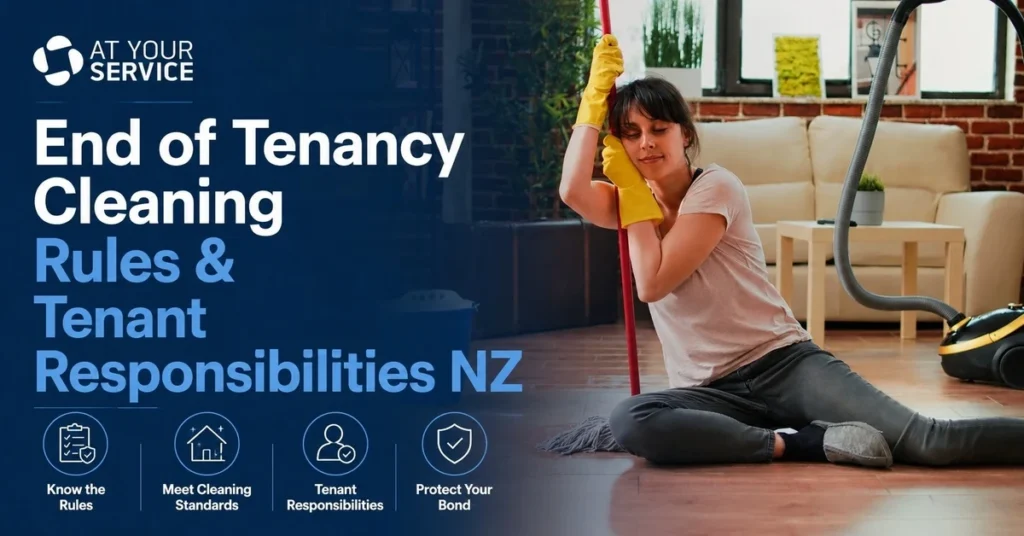
Moving out of a rental comes with a long to-do list, and cleaning is right at the top. But a lot of tenants either overdo it based on pressure from landlords, or underdo it and lose part of their bond. Understanding what the law actually says, what landlords can and cannot expect, and where the line sits between reasonable and unreasonable is the most important thing you can do before handing back the keys.
This guide covers end of tenancy cleaning rules in New Zealand, your rights and responsibilities as a tenant, and practical answers to the questions that trip most people up.
What Does NZ Law Say About End of Tenancy Cleaning Rules?
The starting point for all end of tenancy cleaning responsibilities in New Zealand is the Residential Tenancies Act 1986, specifically Section 40.
Under Section 40, tenants are required to leave the premises in a reasonably clean and reasonably tidy condition, remove or arrange for the removal of all rubbish, and return all keys and security devices to the landlord.
That’s it. Three core obligations. Notice what the law does not say: it does not say the property must be professionally cleaned, it does not say it must be returned to showroom condition, and it does not say every individual surface must be spotless.
Tenants are only required to leave premises in a condition that an average, reasonable person would consider clean and tidy. This does not mean spotless, or what a landlord would consider acceptable to then re-let to a new tenant.
This is a critical distinction. Landlords wanting to bring the property to a re-letting standard is a business decision, and that cost sits with them, not you.
What the Tenancy Tribunal Says About “Reasonably Clean and Tidy”?
The phrase “reasonably clean and tidy” sits at the heart of most end of tenancy disputes in NZ. It sounds simple, but it’s one of the most debated standards in tenancy law.
A recent Tenancy Tribunal case clarified that the words “reasonably clean and reasonably tidy condition” do not impose an absolute standard.
The standard will vary according to the age and condition of the premises. There is also no requirement that each and every individual item in the premises be left reasonably clean and tidy, only an overall obligation in relation to the tenancy premises.
Practically speaking, this means the standard you’re being held to at the end of your tenancy is relative to the condition the property was in when you moved in. You don’t have to leave the place any cleaner or tidier than it was when you moved in.
If the oven was dirty when you arrived and it was noted on the entry condition report, you cannot be held to a higher standard at the end. If the carpets were worn on arrival, you’re not expected to return them in better condition than you found them.
This is why the entry condition report matters so much, and we’ll come back to that shortly.
What Are Tenants Actually Required to Clean?
Based on the Residential Tenancies Act and Tenancy Tribunal guidance, here is what end of tenancy cleaning in NZ reasonably requires:
Kitchen:
- Wipe down benchtops, splashbacks, and surfaces
- Clean the stovetop and oven to a reasonable standard
- Wipe out cupboards and drawers (inside and out)
- Clean the sink and taps
- Wipe down the fridge and microwave inside and out
Bathrooms and toilets:
- Scrub the toilet, shower, and bath
- Clean the vanity, mirror, and taps
- Remove soap scum and surface mould
- Mop the floor and wipe skirting boards
Bedrooms and living areas:
- Vacuum carpets and mop hard floors
- Wipe windowsills and window tracks
- Remove cobwebs from ceilings and corners
- Wipe light switches and door handles
Throughout the property:
- Remove all personal belongings and rubbish
- Return all keys, access cards, and landlord-provided items
- Leave outdoor areas, lawns, and gardens in reasonable condition
A tenant is not required to rigorously clean all walls, ceilings, lightshades, skirtings, behind appliances, or the outside of the house. It is common for a landlord to want to clean to this extra level so they can re-tenant or sell. However, that is a business decision that the landlord makes at their own cost.
Is Professional Cleaning Required at End of Tenancy?
This is one of the most common points of confusion in NZ tenancy law, and the answer is clear.
No, professional cleaning is not automatically required.
The property needs to be reasonably clean and tidy when you leave. You do not always have to get professional cleaning done unless this is needed to bring the property up to that standard.
So professional cleaning may be necessary, but only if the property genuinely needs it to reach a reasonable standard. If the property is already reasonably clean after your own efforts, a professional clean cannot be demanded.
What about tenancy agreement clauses? Many landlords include a clause requiring professional cleaning at end of tenancy. However:
Tenancy Services considers a clause in a tenancy agreement that “the property must be professionally cleaned at the end of the tenancy” to be likely unenforceable, as it goes beyond what the Act requires.
You cannot write clauses into tenancy agreements that conflict with the Act. The Tenancy Tribunal may consider such clauses unenforceable, and in some cases these clauses may amount to an unlawful act.
In short: professional cleaning end of tenancy rights sit firmly with the tenant. You cannot be forced to pay for professional cleaning simply because a landlord wants it or because it was written into the agreement.
What Are Landlord Cleaning Expectations, and What’s Actually Enforceable?
Understanding landlord cleaning expectations helps you know where to push back and where to comply.
What landlords can reasonably expect:
- The property left reasonably clean overall
- All rubbish removed
- No significant stains, soiling, or damage beyond normal wear and tear
- Gardens mowed and in reasonable order
- Keys returned on the final day
What landlords cannot reasonably demand:
- A property cleaned to a higher standard than it was at the start
- Professional carpet cleaning if carpets are reasonably clean
- Repainting of walls where the marks are fair wear and tear
- Cleaning of areas that were already dirty or damaged at the start of the tenancy
- Costs for cleaning that goes beyond what’s needed to reach a “reasonable” standard
Section 40 of the Residential Tenancies Act requires tenants to leave the premises “reasonably clean and reasonably tidy.” It does not say “professionally cleaned” or “returned to showroom standard.” A landlord cannot demand carpets be shampooed or ovens be sparkling unless the condition was that way at the start.
Fair Wear and Tear vs Damage Differences
This distinction is central to almost every end of tenancy cleaning dispute in NZ.
Wear and tear can be thought of as “time doing its thing” while damage is “someone not doing their job.”
Fair wear and tear includes:
- Minor scuffs on skirting boards from furniture
- Light fading of carpets or curtains from sunlight
- Gradual flattening of carpet in high-traffic areas
- Small nail holes from hanging pictures (standard-sized)
- General dulling of surfaces over time
Tenant damage includes:
- Stains from spills that were not cleaned up
- Burns on carpet, benchtops, or other surfaces
- Significant mould caused by poor ventilation habits
- Pet-related damage or odours
- Holes in walls beyond normal picture-hanging
- Broken fixtures or fittings
The Residential Tenancies Act doesn’t provide a detailed definition of wear and tear, but Tribunal decisions over the years have set a clear expectation that landlords must allow for the natural lifespan of items and not expect the property to be handed back in “as new” condition. Tenancy
Tenants are responsible for cleaning up or repairing damage. They are not responsible for wear and tear. Bond deductions for wear and tear are not lawful.
Are Landlords Allowed to Look in Cupboards During Inspections?
This is a common question, especially during end of tenancy final inspections.
During the tenancy, landlords can only inspect a property between 8am and 7pm after providing written notice at least 48 hours in advance. They cannot inspect more than once every four weeks.
Any cupboard where there is plumbing, such as under the kitchen, bathroom, or laundry sink, may be checked during an inspection. Beyond plumbing-related cupboards, opening personal storage like wardrobes during a routine inspection is generally considered intrusive. Tenants have the right to privacy, and inspections should be reasonable in timing and scope.
At the final inspection, the situation is different. The property is being returned to the landlord, so a thorough walkthrough of all areas, including inside cupboards and drawers, to check for cleanliness and for any items left behind, is standard practice and reasonable.
This is why end of tenancy cleaning should include wiping out the inside of all cupboards and drawers. Property managers in NZ routinely check these areas at final inspections.
Importance of the Entry Condition Report
The entry condition report is your strongest protection at the end of a tenancy. It records the state of the property when you moved in, and that record sets the baseline you’re held to when you move out.
A good starting point for what is reasonable can be to state the level of cleanliness in the ingoing inspection report. If the premises is not clean and tidy at the beginning of the tenancy, it would be very difficult to convince a tenant that they needed to leave the premises in a better condition than when they moved in.
Make sure the entry condition report is accurate, complete, and signed by both parties. Add photos dated on the day you moved in. Note any pre-existing damage, staining, mould, or areas that were less than clean. This documentation is critical if a dispute arises later.
Take plenty of photos of the premises at the start and end of the tenancy to show that you did in fact leave it clean and tidy. If you have left the premises reasonably clean and tidy, you cannot be forced to pay for further cleaning costs above this, and the landlord is not entitled to withhold the bond for this reason. Cooperandco
What If Your Landlord Disputes the Cleaning Standard?
If your landlord claims the property wasn’t cleaned to standard and you disagree, here are your options.
Talk to them first. In many cases, disputes can be resolved through a direct, calm conversation. Ask for specific evidence of what was inadequate and compare it to the entry condition report.
Contact Tenancy Services. The government’s Tenancy Services helpline (0800 83 62 62) provides free advice to both tenants and landlords on their rights and obligations.
Apply to the Tenancy Tribunal. If the dispute can’t be resolved, either party can apply to the Tenancy Tribunal. The Tribunal will consider the entry inspection report, exit photos, any cleaning receipts, and other evidence from both sides. If a landlord takes a tenant to the Tenancy Tribunal to get them to pay for cleaning or repairs, the landlord will have to show that the damage happened during the tenancy and that it’s not just fair wear and tear.
Having solid documentation on both ends of the tenancy is the single most effective way to protect yourself.
Practical Steps to Meet Your End of Tenancy Cleaning Obligations
- Start cleaning several days before you hand back the keys
- Work room by room using a checklist
- Make sure inside cupboards, drawers, and wardrobes are wiped out
- Clean windows inside, and outside where safely accessible
- Vacuum and mop all floors
- Take dated photos of every room when you’re done
- Keep receipts for any professional services you arrange
- Return all keys and landlord-provided items on the final day
- Remove every item of your own, including from outdoor areas and the garage
Frequently Asked Questions
What are the rules for ending a tenancy in NZ?
When your tenancy comes to an end, you must move out and take all your things with you, leave the place reasonably clean and tidy including removing all rubbish, leave all furniture and appliances the landlord provided, and return the keys. You are not required to leave the property in a better condition than it was when you moved in. Jae
Is professional cleaning required at end of tenancy in NZ?
Not automatically. Professional cleaning is only required if it’s genuinely needed to bring the property up to a reasonable standard of cleanliness. Clauses in tenancy agreements demanding professional cleaning regardless of condition are likely unenforceable under the Residential Tenancies Act.
What is the end of tenancy cleaning law in NZ?
Section 40 of the Residential Tenancies Act 1986 requires tenants to leave the premises reasonably clean and tidy and remove all rubbish. The standard is relative to the condition at the start of the tenancy, not an absolute standard, and professional cleaning is not mandated.
Are landlords allowed to look in cupboards at the final inspection?
Yes, at the final inspection it is reasonable for landlords or property managers to check inside cupboards and drawers to verify cleanliness and ensure nothing has been left behind. Make sure all cupboards are wiped clean and fully empty before the final walkthrough.
What can a landlord legally deduct from my bond for cleaning?
A landlord can only deduct from your bond for cleaning costs that are genuinely needed to bring the property back to the condition it was in at the start of the tenancy, accounting for fair wear and tear. They cannot deduct for professional cleaning unless it’s genuinely necessary, and they must provide evidence of the cost. If you disagree with a deduction, you can dispute it at the Tenancy Tribunal.