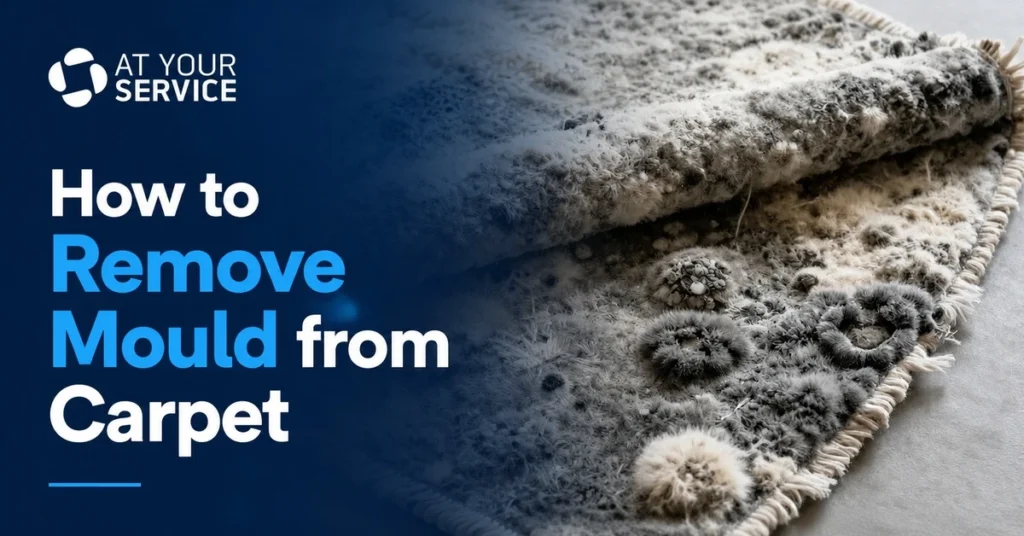
How to remove mould from carpet depends on how severe the growth is and how long it has been present. For surface mould caught early, vinegar or baking soda treatments can be effective DIY solutions. For mould that has spread into the underlay or padding, professional treatment or carpet replacement is usually the only safe option.
In this guide, you’ll learn how to identify carpet mould, remove it safely using proven DIY methods, treat mould underneath the carpet, and understand when professional cleaning or carpet replacement is the right call.
Quick Answer: For small surface mould patches, vacuum the area with a HEPA filter vacuum, apply undiluted white vinegar and leave for 30 to 60 minutes, scrub gently with a stiff brush, blot dry, apply baking soda overnight, then vacuum again. Dry the area completely using fans and open windows. If the mould has penetrated the underlay or covers a large area, professional treatment or replacement is needed.
Quick Mould Severity and Treatment Guide
| Mould Situation | Recommended Treatment |
| Small surface patch (under 30cm) | DIY: vinegar, baking soda, thorough drying |
| Larger surface patch (30cm to 1m) | DIY + commercial antifungal, monitor closely |
| Musty smell but no visible mould | Lift carpet edge and inspect underlay |
| Mould visible in underlay or padding | Professional cleaning or underlay replacement |
| Black mould confirmed or suspected | Professional assessment, possible full replacement |
| Carpet wet for more than 48 hours | Professional drying or replacement recommended |
| Mould after flood or water damage | Professional remediation required |
What Causes Mould to Grow on Carpet?
Mould is a serious problem in New Zealand due to its damp climate. According to the Environmental Health Intelligence New Zealand 2023 Dampness and Mould report, 22.9% of surveyed renting households recorded having mould, compared to 10.4% of owner-occupied dwellings. Carpet is one of the most common places mould takes hold because it traps moisture, organic matter, and warmth, all the conditions mould needs to grow.
Mould needs three things to grow: moisture, warmth, and organic material. Carpet provides all three.
Houses that are damp provide the perfect conditions for mould and dust mites to grow. Keeping your carpet clean is one of the ways to protect your household from associated health risks.
The most common causes of carpet mould in NZ homes are:
Water damage and flooding.
Flooding, burst pipes, roof leaks, or window condensation all introduce moisture into carpet fibres and underlay. If standing water has been present for any extended period of time, carpet will probably need to be replaced.
Inadequate drying after cleaning.
Overwetting carpet during DIY cleaning, then failing to dry it thoroughly, is one of the most common causes of mould we see in NZ homes. The surface dries and looks fine, but moisture trapped in the underlay creates ideal mould conditions within 24 to 48 hours.
High indoor humidity.
New Zealand’s damp climate creates conditions where mould thrives, causing allergies, respiratory problems, and neurological symptoms if left untreated. Coastal regions, basements, and poorly ventilated rooms are particularly at risk.
Spills left untreated.
Any liquid spill that is not fully dried can introduce sufficient moisture to start mould growth in the underlay beneath the carpet surface.
Poor ventilation.
Rooms with limited airflow hold humidity close to floor level. Combined with carpet’s moisture-trapping properties, this creates a chronic mould risk without any single dramatic event.
In our experience cleaning carpets across New Zealand, mould problems are most commonly found in bedrooms with poor ventilation, rooms adjacent to bathrooms, and basements. Corners and areas near exterior walls are almost always the highest-risk spots, particularly in homes built before 2000.
How to Identify Mould in Carpet?
Mould often starts beneath the carpet surface, which is why it can be well-established before it becomes visible. Knowing the signs helps you catch it early.
Persistent musty or earthy smell.
A musty smell that doesn’t go away after normal cleaning is one of the clearest signs of mould growth, even when nothing is visible on the surface. If the smell becomes stronger during damp weather or when heating is running, it suggests mould may be present in the carpet or padding beneath.
Visible discolouration.
Look for patches of black, green, grey, or white growth on the carpet surface. Even if the carpet appears clean at first glance, subtle changes in colour, watermarks, or faint blotches can indicate mould developing underneath the fibres, hidden from plain sight.
Damp or soft areas.
Areas of carpet that feel soft, spongy, or damp to the touch despite no recent spills point to trapped moisture beneath the surface.
Slimy or sticky fibres.
Slimy or sticky carpet fibres are a sign of advanced mould growth and can cause permanent damage to the carpet. In many cases, this indicates that the underlying padding or subfloor may also be affected.
Unexplained health symptoms.
Increased allergy symptoms, coughing, sneezing, or asthma flare-ups that worsen indoors, particularly in carpeted rooms, can indicate hidden mould growth.
How to Check Under the Carpet
Pull back the edge of the carpet in a corner or along a wall. Look at the padding and backing. Dark spots, green patches, or fuzzy growth point to mould. Use a torch for areas with poor lighting. Wear gloves to avoid direct contact with any growth.
If you find mould in the underlay or padding, the severity determines whether cleaning or replacement is the right path. A small affected area in the underlay may be treatable. Widespread contamination almost always means replacement is the only safe option.
Types of Mould Found in Carpet
Not all carpet mould carries the same risk level. Understanding the types helps you decide how to respond.
Allergenic moulds are the most common type in NZ homes. They trigger hay fever-like symptoms, eye irritation, and skin reactions, particularly in people who are already prone to allergies. These are generally treatable with proper cleaning and drying.
Pathogenic moulds can cause infections and illness, particularly in people with compromised immune systems, infants, and the elderly.
Toxic moulds (including Stachybotrys, commonly called black mould) are the most serious category. If any black mould is found, it is recommended that it be tested to determine if it is Stachybotrys chartarum. Some moulds can release substances that are potentially toxic and should be treated with caution. Contact your local council if you want to find out if the mould in your house is a health risk to the occupants.
The colour of mould alone does not reliably indicate toxicity. Black spots on carpet are not always Stachybotrys. Testing through an accredited NZ laboratory is the only way to confirm the mould type when toxic mould is suspected.
Is Mould on Carpet Dangerous For Health
This question comes up frequently and deserves a direct, honest answer.
When mould reproduces, it releases countless tiny spores into the air. Health problems arise when large numbers of these spores are inhaled, ingested, or come into contact with skin. Mould can cause health problems such as allergic reactions similar to hay fever, breathing difficulties, eye irritation, skin rashes, and occasionally more serious symptoms. Those with pre-existing asthma and those with weakened immune systems, as well as infants and the elderly, are at the greatest risk.
There is clinical evidence that exposure to mould and other dampness-related microbial agents increases the risks of conditions including hypersensitivity pneumonitis, allergic alveolitis, chronic rhinosinusitis, and allergic fungal sinusitis.
Walking barefoot on musty, mouldy carpet creates a risk of hives or eczema from direct skin contact with mould spores.
In our experience, clients who have been sleeping in rooms with undetected carpet mould often report waking up with blocked sinuses and worsening allergy symptoms, with no obvious cause. Once the mould is treated and the carpet properly dried, these symptoms typically resolve. If you or a household member is experiencing unexplained respiratory or skin symptoms, checking for carpet mould is worth doing before seeking other explanations.
Is it safe to sleep in a room with mould in the carpet?
No. Mould spores become airborne, particularly when the carpet is disturbed by walking or vacuuming. Sleeping in a room with active mould growth means extended exposure to airborne spores throughout the night. Treat or remove the mould before resuming use of the room.
Safety Precautions Before You Start
Protecting yourself before treating carpet mould is not optional. Mould spores become airborne during cleaning and can cause the health issues described above.
Before beginning any mould removal:
- Wear a P2-rated face mask or respirator. A standard surgical mask does not filter mould spores adequately.
- Wear rubber gloves and protect your eyes with safety glasses or goggles
- Open all windows and doors in the room to maximise ventilation
- Keep children and pets out of the room during treatment
- Never mix bleach with vinegar, ammonia, or other cleaners, as this creates dangerous fumes. Always test any solution on a hidden corner of the carpet first to check for colour fading.
- Use a HEPA-filter vacuum at all stages. Standard vacuums spread mould spores rather than capturing them.
How to Remove Mould from Carpet
What You’ll Need
- HEPA-filter vacuum
- Stiff-bristled scrubbing brush
- White vinegar (undiluted)
- Baking soda
- Spray bottle
- Clean white cloths or paper towels
- Hydrogen peroxide (3% pharmacy grade) for stubborn patches
- Fan and dehumidifier for drying
- Protective gear as listed above
Step 1: Ventilate the Room
Open all windows and doors. Set up a fan to direct air out of the room if possible. Good airflow throughout the entire process reduces the concentration of airborne mould spores and significantly speeds up drying later.
Step 2: Vacuum with a HEPA-Filter Vacuum
Thorough vacuuming using a HEPA-filter vacuum is the essential first step, as it removes loose mould spores before any wet treatment is applied. Vacuum the affected area and a generous margin around it. Empty or dispose of the vacuum bag or canister contents outside the home immediately after.
Step 3: How to Remove Mould from Carpet with Vinegar
The acetic acid in vinegar can kill approximately 82% of mould species. It is the most effective and safest first-line treatment for surface carpet mould.
Spray undiluted vinegar directly onto the mouldy area. Let it sit for at least 30 minutes, then scrub with a stiff brush. Rinse with water and blot dry with a towel.
For larger or more established patches, leave the vinegar for a full hour before scrubbing. Work from the outside edge of the mould patch inward to avoid spreading spores to clean areas.
Consumer NZ advises a 70:30 solution of white vinegar and water for mould removal. For toxic strains, the Ministry of Health recommends commercial mould cleaner.
Step 4: How to Remove Mould from Carpet with Baking Soda
Sprinkle baking soda over the affected area. It absorbs excess moisture and neutralises mould odours. Leave it overnight and vacuum the next day.
Applying baking soda after the vinegar treatment provides a secondary treatment while drawing residual moisture to the surface of the carpet. This is especially important in NZ’s humid climate, where carpets dry more slowly and re-introduction of moisture carries a higher risk of mould re-growth.
Step 5: How to Remove Mould from Carpet with Hydrogen Peroxide
For persistent mould that the vinegar treatment hasn’t fully resolved, hydrogen peroxide offers stronger antifungal action.
Apply hydrogen peroxide to the affected area using a spray bottle. Leave it for a few minutes, then scrub with a stiff brush. Blot and allow the area to dry properly, then vacuum to remove any remaining residue.
Use only 3% hydrogen peroxide (standard pharmacy grade). Always test on a hidden area first, as hydrogen peroxide can lighten darker carpet colours. Do not use on wool carpet without professional advice.
Step 6: Dry the Carpet Completely
This step is not optional. Mould will return rapidly if any moisture remains in the carpet or underlay.
The carpet must be dried completely using fans, dehumidifiers, or direct sunlight to prevent mould from returning.
Run fans across the treated area on high for at least 24 to 48 hours. Use a dehumidifier in the room simultaneously. In summer, opening windows and allowing sunlight to reach the area speeds drying significantly. In winter, a portable heater combined with a dehumidifier is the most effective drying approach.
Do not replace furniture or allow the room to be used until the carpet is completely dry to the touch, including pressing down firmly to check for moisture deeper in the pile.
Step 7: Apply a Final Baking Soda Treatment and Deodorise
Once the carpet is fully dry, apply a final light layer of baking soda over the treated area. Leave for several hours, then vacuum thoroughly. This removes any residual odour and confirms the carpet is dry enough that the baking soda remains powdery rather than clumping.
How to Remove Mould Underneath Carpet and from Carpet Padding
Surface treatment alone cannot resolve mould that has penetrated the underlay. This is one of the most important points in this guide, and one most DIY articles fail to address honestly.
Wet padding beneath carpet, whether from a spill, leak, or condensation, creates conditions where mould grows. In many cases, if mould has grown on carpet padding, cleaning will not be possible and the padding may need to be replaced along with the carpet.
After cleaning the carpet surface, lift the carpet at the affected area and inspect the padding and the subfloor beneath it.
If the underlay is damp but not visibly mouldy:
Allow it to dry completely using fans and a dehumidifier. Spray with a commercial antifungal product approved for use on padding. Monitor closely for any sign of mould growth over the following weeks.
If the underlay shows mould growth:
You can try a DIY treatment as a first-aid measure, but professional help is needed for more severe cases to avoid further damage. In most cases where padding has visible mould, replacement is the safer and more cost-effective long-term option compared to attempting treatment.
If the subfloor has mould:
This is beyond DIY territory. Subfloor mould requires professional assessment and remediation. Laying new carpet over a mouldy subfloor will result in mould returning in the new carpet within weeks.
In our experience treating water-damaged properties in New Zealand, the single most common mistake we see is homeowners treating the carpet surface thoroughly, then re-laying it over damp or mouldy underlay. The mould returns within weeks and the carpet is usually unsalvageable by that point. Always inspect the underlay before re-laying any carpet after a water event.
Can a Mouldy Carpet Be Saved?
This is the honest question most people need answered and most guides avoid.
Generally, if a carpet has been wet for more than 24 to 48 hours, it is unlikely to dry fully underneath the surface. In these situations, replacement is safer and healthier than restoration attempts.
Replace the carpet when:
- Mould is visible across a large portion of the carpet surface
- The underlay has confirmed mould growth that cannot be dried out
- The carpet has been wet for more than 48 hours continuously
- A musty smell persists despite thorough treatment and complete drying
- The subfloor beneath the carpet shows mould or water damage
- Black mould has been identified or is suspected
Keep the carpet (with professional treatment) when:
- The mould is a small, isolated surface patch caught early
- The underlay is dry and shows no contamination
- The cause of the moisture has been identified and resolved
- Professional extraction cleaning can reach the full depth of the affected area
Even then, removal and cleaning are not guaranteed to prevent mould growth returning. It is more likely that the carpet will need to be replaced if the moisture source is not fully resolved.
How to Prevent Mould from Growing on Carpet
Prevention is significantly easier than treatment. After cleaning hundreds of NZ carpets, we consistently see that the homes with the least mould are those where ventilation and moisture control are treated as daily habits rather than occasional tasks.
Control indoor humidity. Keeping indoor humidity levels below 60% can prevent mould growth. Use dehumidifiers in areas prone to high humidity. In NZ coastal and winter conditions, this often requires active dehumidification rather than ventilation alone.
Ventilate every day. Keep your home warm, dry, and well-ventilated. Open bedroom and living room windows for at least 30 minutes daily, even in winter. This dramatically reduces the chronic humidity build-up that leads to carpet mould.
Dry spills immediately and completely. Any liquid on carpet should be blotted, treated, and fully dried within hours. Use fans to accelerate drying. Do not assume the surface being dry means the underlay is dry. Press firmly to check.
Dry carpets thoroughly after professional cleaning. If any water or liquid has come into contact with the carpet during cleaning, ensure it is dried thoroughly afterward. Arrange professional cleans for days with good drying conditions, not winter weekdays with windows closed.
Address leaks and condensation immediately. Slow leaks from pipes, window frames, or roofs are a primary cause of chronic carpet mould. Fixing the moisture source permanently is always more effective than repeated mould treatment.
Use anti-mould underlay when replacing carpet. Anti-fungal treated underlay adds a meaningful level of protection, particularly in high-risk areas like basements, bathrooms, and below-grade rooms.
Schedule regular professional cleaning. Keeping your carpet clean is one of the most effective ways to protect your household from mould and associated health risks. Professional hot water extraction removes the deep organic matter that mould feeds on and is significantly more effective than DIY methods for long-term mould prevention.
When to Call a Professional for Carpet Mould Removal
Some carpet mould situations require professional intervention. Attempting DIY removal on severe mould can spread spores through the property, worsen the contamination, and create health risks during the process.
Call a professional when:
- The affected area is larger than approximately one square metre
- Black mould is visible or suspected
- The mould has penetrated the underlay or subfloor
- The carpet has been water-damaged and the smell persists after drying
- Household members are experiencing respiratory symptoms or skin reactions
- The moisture source has not been identified and resolved
When toxic mould is found, employing a specialist contractor to carry out the removal is recommended.
For mould that is beyond DIY treatment, a professional carpet cleaning service can assess the full extent of contamination, treat both the carpet and underlay safely using commercial-grade extraction equipment, and advise honestly on whether cleaning or replacement is the right outcome. This kind of honest assessment before committing to treatment is something DIY methods cannot provide.
Frequently Asked Questions
How do you remove mould from carpet?
Vacuum with a HEPA-filter vacuum first. Apply undiluted white vinegar to the affected area and leave for 30 to 60 minutes. Scrub gently with a stiff brush, blot dry, then apply baking soda overnight and vacuum again. Dry the area completely with fans and a dehumidifier. For larger or more stubborn mould patches, use hydrogen peroxide or a commercial antifungal product. Always check the underlay before re-laying the carpet.
What kills mould on carpet?
Vinegar, which contains acetic acid, can kill approximately 82% of mould species and is the safest first-line treatment for surface carpet mould. Hydrogen peroxide (3% pharmacy grade) provides stronger antifungal action for persistent mould. For confirmed or suspected toxic mould, commercial antifungal cleaners or professional treatment are recommended. The Ministry of Health recommends commercial mould cleaner for toxic mould strains.
Can you get sick from mouldy carpet?
Yes. Mould spores can cause allergic reactions similar to hay fever, breathing difficulties, eye irritation, and skin rashes. Those with pre-existing asthma, weakened immune systems, infants, and the elderly are at the greatest risk. Sleeping in a room with active carpet mould means extended nightly exposure to airborne spores. Treat mould as a health priority, not just a cosmetic issue.
Is it safe to sleep in a room with mould in the carpet?
No. Mould spores become airborne when carpet is disturbed. Sleeping in the room means prolonged overnight exposure to those spores. Vacate the room and treat the mould before resuming use.
Does baking soda kill mould in carpet?
Baking soda neutralises mould odours and absorbs moisture, which helps inhibit mould growth. However, it does not kill mould at the root the way vinegar or antifungal cleaners do. Use baking soda as a complementary step after vinegar or hydrogen peroxide treatment, not as a standalone mould killer.
How do you remove mould underneath carpet?
Lift the carpet at the affected area and inspect the underlay. If the underlay is damp but not visibly mouldy, dry it completely with fans and dehumidifiers and treat with a commercial antifungal product. If padding has visible mould growth, in many cases it will need to be replaced rather than cleaned, as cleaning is not guaranteed to prevent re-growth.
Is bleach or vinegar better to kill carpet mould?
Vinegar is generally the better choice for carpet. Never mix bleach with vinegar, ammonia, or other cleaners, as this creates dangerous fumes. Bleach on carpet can permanently strip dye from the fibres and may not penetrate deeply enough to kill mould at the root. Vinegar is safer, effective on most mould species, and will not damage most carpet types when used correctly.