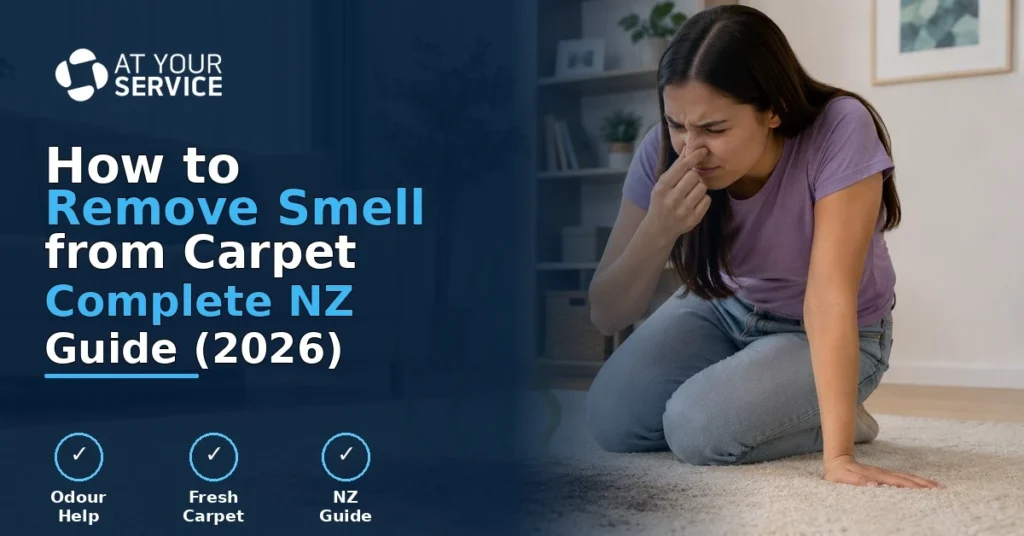
How to remove smell from carpet depends on what’s causing the odour. For general carpet smells, baking soda is often enough to absorb odours and freshen fibres. For pet urine, vomit, milk, or other organic spills, an enzyme cleaner is usually the most effective solution because it breaks down the source of the smell rather than masking it. If the odour is caused by dampness, mould, or water damage, the carpet must be dried thoroughly before any deodorising treatment will work.
In this guide, you’ll learn how to remove smell from carpet using baking soda, vinegar, enzyme cleaners, and other proven methods. We’ll cover pet urine odours, musty smells, mould, vomit, milk spills, and the situations where professional carpet cleaning may be the best solution.
Quick Answer: For most carpet odours, vacuum thoroughly, apply baking soda generously, leave it overnight, then vacuum again. If the smell persists, identify the source and use a targeted treatment such as an enzyme cleaner for pet accidents or moisture removal for musty odours.
Quick Carpet Odour Removal Guide
| Smell Type | Best Treatment | DIY or Professional? |
| General carpet smell | Baking soda | DIY |
| Pet urine | Enzyme cleaner | DIY / Professional |
| Cat urine | Enzyme cleaner | DIY / Professional |
| Musty smell | Drying + vinegar | DIY |
| Mould smell | Mould treatment | Usually Professional |
| Vomit smell | Enzyme cleaner | DIY |
| Milk smell | Enzyme cleaner | DIY |
| Water damage smell | Drying + extraction | Professional |
What Causes Carpet to Smell?
Before reaching for baking soda, it helps to understand what’s actually causing the smell. The source determines the right treatment.
Carpet fibres trap surrounding odours. Moisture is a major cause of foul smells becoming embedded in carpet fibres and the underlayment beneath them. Carpets absorb spills, pet messes, and standing water, which leave behind an unpleasant odour over time.
The most common sources of carpet odour in NZ homes are:
Pet urine and accidents.
Cat urine contains uric acid, waste substances, urea, salt, and electrolytes. Being a liquid, it quickly sinks through all layers of carpet right down to the floor. Once bacteria begin to break down the urine, the smell intensifies and becomes increasingly ammonia-like.
Moisture and damp.
Moisture trapped inside carpet fibres settles into the underlay, which acts like a sponge. Once that padding absorbs dirty or stagnant water, bacteria multiply quickly in warm, damp conditions. Mildew follows close behind.
Mould beneath the carpet.
Carpet mould typically produces a musty, earthy smell that gets stronger in humid conditions. The smell comes from microbial volatile organic compounds (MVOCs) that mould releases as it grows and feeds.
Food and drink spills.
Food and drinks account for most spills. As organic material, food and drink create bacteria that release unpleasant smells over time and can become some of the hardest odours to fully remove.
General soiling and poor ventilation.
Poor air circulation not only causes smells to linger but also increases indoor humidity. Higher humidity increases the chances of dampness in carpeting and encourages mould and bacteria growth.
Identifying the source first saves time and prevents applying the wrong treatment to the wrong type of odour.
How to Remove General Smell from Carpet at Home
How to Remove Smell from Carpet with Baking Soda
Baking soda is the most accessible and safest starting point for general carpet odour removal. It works by absorbing odour-causing compounds rather than just masking them with fragrance.
Baking soda is a powerful odour absorber and an excellent choice for deodorising carpets. Sift baking soda through a flour sifter to prevent clumps. Sprinkle it evenly over the carpet and work it in gently. Let it sit for several hours or overnight. Vacuum the carpet thoroughly to remove all the baking soda.
For stronger odours, leave the baking soda for a full 24 hours before vacuuming. The longer it sits, the more odour it absorbs. People often hesitate to use enough baking soda, but the more you apply, the better it will work on eliminating odour.
To add a natural fresh scent alongside the odour absorption, mix a few drops of essential oil into the baking soda before sprinkling. Lavender, tea tree, or eucalyptus all work well.
NZ tip: In high-humidity regions like Auckland, Tauranga, and the Waikato, baking soda can absorb atmospheric moisture quickly and clump in the carpet. Use a flour sifter as recommended and vacuum thoroughly. If the carpet is already damp, allow it to dry before applying baking soda.
How to Remove Smell from Carpet with Vinegar
Vinegar is effective for musty, bacteria-based, and mild pet odours. It works by neutralising alkaline odour compounds and killing surface bacteria.
Mix equal parts white vinegar and water in a spray bottle. Lightly mist the affected carpet area. Do not soak it. Let the mixture sit for 10 to 15 minutes. Blot dry with clean towels and allow it to air dry fully.
The smell of vinegar itself dissipates within a few hours as it dries. If the vinegar smell lingers, sprinkle a light layer of baking soda over the treated area once it has dried, leave for 30 minutes, then vacuum.
Vinegar is safe for most synthetic carpet types. For wool carpet, always dilute to one part vinegar to three parts water and test on a hidden area first, as prolonged exposure to acid can affect natural fibres.
How to Remove Smell from Carpet with Baking Soda and Vinegar Combined
For stronger embedded odours, combining baking soda and vinegar delivers better results than either method alone.
- Sprinkle a generous layer of baking soda over the affected area
- Mix equal parts white vinegar and water in a spray bottle
- Spray the vinegar solution over the baking soda until it fizzes
- Leave the mixture to work for 15 to 20 minutes
- Blot the area with a clean white cloth from the outside inward
- Rinse with plain cold water and blot dry thoroughly
- Once fully dry, vacuum to remove any residue
Start with baking soda, then use an enzyme cleaner if needed. This is the most practical and effective way to eliminate smell from carpet. Blot spills immediately, use baking soda for mild odours, and try a vinegar and water solution for tougher smells.
How to Get Dog Odour and Urine Smell Out of Carpet
Pet odours are the most common and most persistent carpet smell issue in NZ homes. Dog urine in particular requires more than just a surface clean.
Why Regular Cleaners Don’t Work on Pet Urine
Pet urine contains uric acid crystals that bond tightly to carpet fibres. When you use regular cleaners or water, you remove only the surface layer. The uric acid crystals remain embedded and reactivate when humidity rises or the heater comes on. That is why the smell seems to return even after cleaning.
Vinegar is an acid that can help neutralise the alkaline salts in older urine, but it does not break down the uric acid crystals the way enzyme cleaners do. If you don’t treat urine properly, uric acid crystals can remain active for up to a decade.
How to Remove Dog Urine Smell from Carpet Naturally
For fresh dog urine accidents:
- Blot the area immediately with several layers of paper towels. Press firmly to absorb as much liquid as possible. Never rub.
- Spray a solution of equal parts white vinegar and cold water directly onto the affected area
- Leave for 10 to 15 minutes, then blot again with a clean cloth
- Apply baking soda over the damp area and allow it to air dry overnight
- Vacuum thoroughly once fully dry
Dog urine contains higher levels of ammonia and bacteria, which leave behind stubborn smells if not treated thoroughly. For fresh accidents, this method works well. For old or repeat accidents in the same spot, enzyme cleaner is necessary.
Using Enzyme Cleaners for Persistent Pet Odour
Enzyme-based cleaners contain live bacteria that break down organic matter such as urine, faeces, and vomit at a molecular level. This is the difference between eliminating an odour and temporarily masking it.
The enzyme cleaner must reach every part of the urine stain, including the carpet padding underneath. For deep stains, saturate the area and let it sit for 10 to 15 minutes. Let the treated area air dry naturally. The enzymes need time to work, typically 24 to 48 hours for complete odour elimination. Avoid using heat or fans, as this can reduce enzyme effectiveness.
Enzyme cleaners are available from most NZ supermarkets and pet stores. Brands including Odarid and urineFREE are widely available in New Zealand and are specifically formulated for pet waste odour.
Important: Steam cleaning too soon sets heat into the urine crystals deeper into fibres. Always use an enzyme cleaner first, then consider steam cleaning only after odours are eliminated.
How to Remove Cat Urine Smell from Carpet
Cat urine is more concentrated and more pungent than dog urine, making it harder to eliminate. Cat urine contains uric acid and bacteria that, as they break down, produce an increasingly strong ammonia smell that worsens over time if left untreated.
A UV blacklight (available cheaply online) helps locate all urine spots, including old dried areas that aren’t visible in normal light. All identified areas need full enzyme treatment to the depth of the underlay.
For old cat urine stains that have been in the carpet for weeks or months, a single enzyme treatment may not be sufficient. If the urine went into the underlay, a light mist on the surface will not reach it. You need enough product to penetrate to where the odour lives, then enough dwell time for the enzymes to complete their work.
How to Get Musty Smell Out of Carpet
A musty carpet smell almost always indicates moisture trapped beneath the surface. This is one of the most common carpet issues in New Zealand homes, particularly in winter and in regions with high coastal humidity.
Damp carpets are common in NZ homes, where heavy rain, coastal humidity, and older plumbing all contribute to dampness. That lingering odour signals that bacteria or mould are quietly building beneath the surface.
Step 1: Find and Remove the Moisture Source
To eliminate any chance of bad odour or mould growth, first find the source of humidity and eliminate it. This may be a pipe leakage, steam from the kitchen or bathroom, or condensation from poor ventilation. Treating the smell without addressing the moisture source means the odour will return.
Step 2: Dry the Carpet Thoroughly
Open every window you can. Run fans across the affected area and use a dehumidifier if available. The situation is especially relevant in coastal NZ regions where coastal humidity slows natural drying. Still air and damp carpet create exactly the conditions mould needs to grow.
If water has reached the underlay, surface drying will not be sufficient. Peel the carpet back and check underneath. Soaked underlay is often where the worst odours live and it may need professional drying or full replacement.
Step 3: Treat the Remaining Smell
Once the carpet is as dry as possible, apply baking soda generously over the entire affected area. Leave overnight, then vacuum thoroughly. Follow with a light misting of the equal-parts vinegar and water solution, allow to dry, then ventilate the room thoroughly.
White vinegar helps disinfect, kill mildew spores, and neutralise odours. Mix equal parts white vinegar and water in a spray bottle. Lightly mist the musty carpet area. Do not soak it. Let the mixture sit for 10 to 15 minutes. Blot dry with clean towels and let it air dry fully.
Is a Damp or Musty Carpet a Health Risk?
This is an important question that most carpet smell guides don’t address directly, and it matters especially in NZ’s climate.
Wet carpets that develop mildew pose real health threats. Breathing in mould and mildew spores can trigger allergic reactions, inflame nasal passages, and cause serious sinus issues.
When mould spores are inhaled, airways can become restricted, causing wheezing or breathing difficulties. If you already have asthma, you are at greater risk of experiencing worsening symptoms. Serious fungal growth can cause permanent damage to airways and lungs if left untreated.
Mould growth in wet carpets also poses risks to the carpet’s longevity. Once it takes hold in the fibres, it is very difficult to remove and may require full carpet replacement.
You should treat water-soaked carpet within 24 to 48 hours to reduce the risk of mould growth significantly. If you can see black, green, or white discolouration on the carpet or underlay, the mould has already established and professional treatment or replacement is necessary.
How to Remove Vomit Smell from Carpet
Vomit contains organic acids and bacteria that produce a persistent smell if not fully removed.
- Remove all solid material using a spoon or blunt scraper. Do not push it deeper into the fibres.
- Blot the area thoroughly with paper towels to absorb as much moisture as possible
- Apply a solution of one teaspoon of dish soap mixed with two cups of cold water. Blot gently.
- Once most of the material is removed, apply an enzyme-based cleaner to break down the remaining organic compounds
- Leave the enzyme cleaner for 15 to 20 minutes
- Blot dry, then apply baking soda over the damp area
- Leave overnight, then vacuum thoroughly
For old vomit smells that have set into the carpet, the enzyme cleaner step is essential. Baking soda and vinegar alone will not fully eliminate the bacteria responsible for the lingering odour.
How to Remove Milk Smell from Carpet
Spilled milk is one of the most deceptive carpet odour problems. It often smells fine initially, then develops a distinctly sour, unpleasant odour days later as the proteins break down.
Blot the spill immediately and thoroughly. Apply cold water sparingly and blot again. Apply an enzyme-based cleaner, as protein-based odours like milk respond specifically to enzyme treatment. Leave for 15 minutes, blot dry, then apply baking soda and leave overnight before vacuuming.
Never use hot water on milk spills. Heat sets the proteins into the fibres, which makes both the stain and the smell significantly harder to remove.
How to Remove Chemical Smell from Carpet After Cleaning
Sometimes carpet smells worse after a clean, not better. Using vinegar or baking soda incorrectly can mask odours temporarily rather than eliminate them. Steam cleaning can bond certain compounds deeper into fibres when applied in the wrong order.
A chemical or soapy smell after cleaning almost always means cleaning product residue has been left in the carpet. This happens when cleaning solution is applied but not fully extracted. Residue left in the fibres acts as an odour source and also attracts dirt rapidly.
To treat it:
- Rinse the affected area with plain cold water applied sparingly
- Blot thoroughly to extract as much moisture and residue as possible
- Allow the carpet to dry completely with maximum ventilation
- Apply baking soda once dry, leave for several hours, then vacuum
Common Mistakes That Make Carpet Smells Worse
Over-wetting the carpet. Using too much water or cleaning solution drives moisture deeper into the underlay. The underlay holds the moisture and continues producing odour long after the surface appears dry.
Using heat on urine or protein-based smells. Steam or heat applied before enzyme treatment bonds uric acid crystals deeper into the fibres. Always use enzyme cleaner first and only apply heat-based cleaning after the biological compounds are broken down.
Masking with fragrance. Air fresheners and spray deodorisers cover the smell temporarily. They do not remove the bacteria or organic compounds causing it. The odour returns as soon as the fragrance fades.
Scrubbing instead of blotting. Scrubbing spreads the contaminated material over a wider area and pushes it deeper into the pile. Always blot from the outside edge inward.
Not addressing the underlay. The backing and underlay hold moisture. Shampooing the surface makes the carpet look and smell better for a short time, but when humidity rises or the heating comes on, the odour returns because it never left the underlay.
When DIY Is Not Enough: Calling a Professional
Some carpet odours simply cannot be resolved at home, no matter how thoroughly the surface is treated.
Call a professional when:
- Pet urine has soaked into the underlay repeatedly from the same spot
- Mould is visible beneath the carpet or in the underlay
- The musty smell persists after full drying and multiple treatments
- The carpet has been water-damaged and the smell remains weeks later
- You are approaching a final tenancy inspection and need a verified clean result
Professional carpet cleaning and odour treatment uses powerful truck-mounted extraction systems that can flush contaminants from the carpet, backing, and underlay. For deep pet urine contamination, this is often the only method that fully eliminates the source rather than treating the surface.
For persistent odour issues that home methods haven’t resolved, a professional carpet cleaning service uses commercial-grade extraction and specialist odour treatment products that reach the full depth of contamination. This is particularly relevant for wool carpet, which requires specialist handling, and for tenants needing end of tenancy cleaning results that satisfy a property manager’s inspection.
How to Keep Carpet Smelling Fresh
Ventilate regularly. Poor air circulation increases indoor humidity, which increases the chance of dampness in carpeting and encourages mould and bacteria growth. Open windows daily where possible, especially in bedrooms and living areas.
Use entrance mats. A quality mat at every exterior door captures the majority of outdoor soil, moisture, and bacteria before it reaches carpet.
Treat spills immediately. The faster a spill is blotted and treated, the less likely it is to produce a lasting odour. Keep enzyme cleaner and baking soda at home so you’re ready when accidents happen.
Vacuum at least weekly. Regular vacuuming removes the dry organic matter that bacteria feed on. Less food for bacteria means less odour over time.
Control indoor humidity. Set up electric fans or use a dehumidifier for better air circulation. Open windows frequently. Find and eliminate sources of indoor humidity such as pipe leaks or steam from kitchens and bathrooms.
Schedule professional cleaning. Carpets need to be professionally cleaned using the hot water extraction method every 12 to 18 months as per NZ Standard 3733 and manufacturer recommendations. Regular professional cleaning prevents the build-up of odour-causing bacteria and organic material that home maintenance alone cannot fully address.
Frequently Asked Questions
How do you get general smells out of carpet?
Sprinkle baking soda generously over the affected area and leave it overnight before vacuuming. For stronger smells, follow with a light mist of equal parts white vinegar and water, let it sit for 10 to 15 minutes, then blot dry and allow to air dry completely. This combination handles most general household carpet odours effectively.
How do you get musty smell out of carpet?
A musty smell almost always means moisture is trapped beneath the carpet. Find and remove the moisture source first. Dry the carpet thoroughly using fans and a dehumidifier. Mix equal parts white vinegar and water and lightly mist the affected area. Let it sit for 10 to 15 minutes, then blot dry and allow to air dry fully. If mould is visible in the underlay, professional treatment is necessary.
Can carpet odours be removed ompletely?
Yes, most carpet odours can be removed completely if the source is treated correctly. Surface odours caused by dirt, food spills, or general use often respond well to baking soda and regular cleaning. More persistent smells such as pet urine, mould, or water damage require deeper treatment because the contamination can penetrate the carpet backing and underlay. The sooner the odour is treated, the easier it is to remove completely.
How do you get dog odour out of carpet?
For fresh urine, blot immediately, apply a vinegar and water solution, then baking soda overnight and vacuum. For old or persistent dog odour, enzyme cleaners break down uric acid crystals at a molecular level, eliminating the source of the smell rather than masking it. Saturate the area sufficiently to reach the underlay and allow 24 to 48 hours of dwell time.
Are enzyme cleaners effective for carpet odours?
Yes. They are the most effective option for pet urine, vomit, milk, and any organic-based odours. Enzyme-based cleaners contain live bacteria that break down organic matter at a molecular level, ensuring the carpet odour is gone for good rather than just masked.
Is a wet carpet smell a health risk?
Yes. Wet carpets that develop mildew can pose real health threats. Breathing in mould and mildew spores can trigger allergic reactions and cause serious respiratory and sinus issues. If a musty smell persists after drying and treatment, check the underlay for mould. Prolonged exposure to carpet mould is a genuine health concern, especially for children and people with asthma.
How does baking soda remove carpet odours?
Baking soda is a neutraliser. In powder form, it absorbs moisture and neutralises both acidic and alkaline odour compounds. It does not kill bacteria but it absorbs the odorous compounds they produce, which reduces the smell significantly. For odours with a biological source such as urine or vomit, follow baking soda treatment with an enzyme cleaner for best results.
When should you call a professional for carpet odour problems?
Call a professional when the odour persists despite repeated DIY treatment, when pet urine has penetrated the underlay repeatedly, when mould is visible beneath the carpet, or when water damage has affected a larger area. Professional extraction systems can reach contamination in the carpet backing and underlay that surface treatment cannot address.