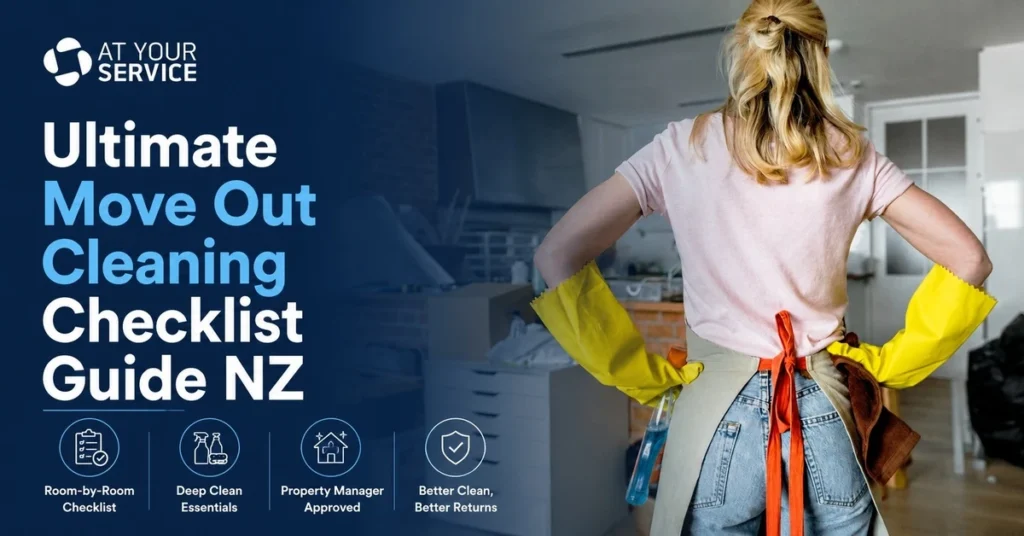
Moving out of a rental property in New Zealand involves a lot of moving parts. Packing, organising removalists, setting up utilities, notifying everyone of your new address. And sitting right at the top of that list, often causing the most stress, is the end of tenancy clean.
Get it right and you walk away with your full bond. Get it wrong and you’re facing deductions, disputes, and potentially a last-minute re-clean on top of everything else. This ultimate move out cleaning checklist covers everything you need to know, from understanding what end of tenancy cleaning actually means, to a full room-by-room breakdown, expert tips, and honest advice on when to do it yourself and when to call in the professionals.
What Is End of Tenancy Cleaning? (And What It Actually Means in NZ)
Before anything else, it helps to understand the end of tenancy cleaning meaning in the New Zealand context, because it’s more specific than it sounds.
End of tenancy cleaning is the process of cleaning a rental property before you move out. In New Zealand, it is also called bond cleaning, exit cleaning, move-out cleaning, or an end of lease cleaning service. They all refer to the same type of cleaning.
The purpose is straightforward: you are required by law to return the property in a condition that is reasonably comparable to how it was when you moved in, accounting for fair wear and tear. This isn’t a standard weekly tidy-up. It’s a thorough, top-to-bottom clean that covers areas most people never touch during regular housekeeping.
A move out clean of a one-bedroom home can take a professional cleaning team four hours, compared to one and a half hours for a regular cleaning service. Move out cleaning includes extra tasks such as cleaning doors and door frames, spot cleaning walls, light fittings, and inside cupboards.
If you’ve never done a move-out clean before, that time difference tells you everything you need to know about the scale of the task.
What is Included in Move out Cleaning Checklist?
What end of tenancy cleaning includes goes well beyond the surfaces you clean week to week. Here’s a full picture of what a thorough end of tenancy house cleaning covers:
End of tenancy cleaning includes scrubbing ovens, steam cleaning carpets, washing walls, polishing skirting boards, cleaning the interior of cabinets, and window tracks.
Across the whole property, a complete end of lease clean should cover:
Kitchen: Inside and outside all appliances (oven, fridge, microwave, dishwasher, rangehood), all cupboards and drawers inside and out, benchtops, splashbacks, sink and taps descaled, stovetop degreased, floors swept and mopped.
Bathrooms and toilets: Toilet scrubbed inside and out including behind the cistern, shower and bath fully cleaned, tiles and grout scrubbed, soap scum removed, vanity and mirror polished, extractor fan cover wiped, floor mopped.
Bedrooms and living areas: Carpets vacuumed thoroughly (steam cleaned if required), hard floors mopped, inside wardrobes and drawers cleaned, windowsills, tracks and handles wiped, skirting boards cleaned, light switches and power points wiped, cobwebs removed from ceilings and corners, ceiling fans and light fittings dusted.
Windows: All glass cleaned inside, frames and tracks wiped out, outside where safely accessible.
Laundry: Washing machine drum, seal and detergent drawer cleaned, dryer and lint trap wiped, tub and tap cleaned.
Garage and outdoor areas: Garage swept, rubbish removed, lawns mowed, garden beds weeded, outdoor furniture wiped down, paths and driveways cleared.
For a detailed breakdown of every room with a printable-style checklist, refer to our Complete End of Tenancy Cleaning Checklist NZ guide.
What You’re Actually Required to Do as per the Legal Standards
A lot of tenants over-clean because of pressure from landlords or confusing tenancy agreement clauses. Understanding the actual legal requirement saves you time, money, and unnecessary stress.
Under Section 40 of the Residential Tenancies Act 1986, you are required to leave the property reasonably clean and tidy and remove all rubbish. That’s the legal baseline. Not professionally cleaned. Not spotless. Reasonably clean.
There is often a lot of confusion around what move-out cleaning includes. The Real Estate Institute of New Zealand says that in 90% of cases, landlords and tenants take a different view of what “reasonably clean and tidy” means.
The standard is relative to the condition of the property when you moved in. If the entry condition report noted the oven was already greasy or the carpet was worn, you cannot be held to a higher standard at the end.
How to Plan Your Move Out Clean Before Starting Out
The single biggest mistake tenants make is leaving the clean too late. A thorough end of tenancy house cleaning for even a modest two-bedroom property takes a full day, and for larger homes it can stretch across an entire weekend.
Build a timeline. Work backwards from your final inspection date. Allow at least two to three full days for cleaning. The first day for kitchens, bathrooms, and appliances. The second for bedrooms, living areas, and windows. The third day as a buffer for anything you missed and for taking your final photos.
Review your entry condition report first. Before you clean a single thing, go through your entry condition report and note what was documented as dirty, worn, or damaged when you moved in. These are areas you cannot be held responsible for now. Don’t waste time cleaning beyond what was your responsibility.
Stock up on the right products. General purpose cleaners won’t cut it for every job. You’ll need oven cleaner and degreaser for the kitchen, a mould-specific spray for bathrooms, grout cleaner for tiles, sugar soap for wall marks, glass cleaner for windows, and microfibre cloths throughout. Using the wrong product costs time and can cause damage.
Move all belongings out first. You need to schedule your end of tenancy cleaning, as it takes longer than a standard weekly clean. A lot longer. If you are doing it yourself, allow at least a full day for a small place and more for larger homes. The clean should happen after all your furniture and belongings are out so every surface and floor area is accessible.
How to Do an End of Tenancy Clean Quickly
If you’re pressed for time, working smart matters as much as working hard. Here’s how to do an end of tenancy clean quickly without missing the things property managers actually check.
Start With the Hardest Jobs First
The best way to tackle your move out clean is to go room by room and focus on one area at a time. Start with the harder or dirtier rooms such as the kitchen and bathroom, and work your way to the easier ones such as the living room and bedroom.
Apply oven cleaner at the very start of your clean. Let it sit and soak while you work on other rooms. By the time you come back to the oven, most of the grease will wipe away with minimal scrubbing.
Kitchen
The kitchen takes the most time and is the most common reason for bond disputes. Don’t rush it.
Apply oven cleaner to the oven interior, racks, and grill tray first, then move on. Soak the rangehood filter in hot degreaser solution in the sink. Wipe down all cupboards inside and out, top to bottom. Clean the fridge interior, including door seals and drip tray. Come back to the oven last once the cleaner has done its job. The oven is the single most common cause of bond disputes. Burnt grease baked into the walls and an encrusted grill rack are easy deductions for landlords to justify.
Finish with the sink, taps, and floor. Always clean floors last in every room.
Bathrooms
Grout and silicone are where bathrooms fail inspections. Apply a mould or grout cleaner and let it sit before scrubbing. Don’t forget the base of the toilet, the back of the cistern, and the extractor fan cover, which collects significant dust and is always checked.
Clean tiles in sections from top to bottom. Finish with the mirror, vanity, and floor.
Bedrooms and Living Areas
Wardrobes should be fully empty and wiped out inside. Check the tops of wardrobe doors and door frames, which collect dust and are routinely missed. Remove all fly spots and cobwebs from ceilings, dust and clean light fittings, and replace any blown bulbs. Clean extractor fans and vents of all dust. Dust and wipe down blinds. Ensure any mould is removed.
Wipe skirting boards along the full length of every room. Check light switches and power points, which carry fingerprint and grime build-up. Vacuum carpets in slow, overlapping rows for best results.
Windows
Clean window glass in sections using a glass cleaner and a lint-free cloth or squeegee. Then wipe the frames and clear out the tracks, which fill with dead insects, dust, and debris. A great tip is to use a vacuum cleaner and a paintbrush to get into window tracks and runners. This combination removes debris without spreading it around.
Outdoor Areas
Mow lawns and trim edges, ensure gardens are free of weeds and rubbish, and clean driveways and paths ensuring they are free of rubbish, grease, oil, and weeds. All rubbish should be left in bins on the kerbside, or removed from the property.
Outdoor areas are part of your tenancy and are included in the final inspection. Neglecting them is a common source of unnecessary bond deductions.
The Biggest Mistakes Tenants Make During Move Out Cleans
Knowing what trips people up is just as useful as knowing what to clean.
Cleaning around furniture. The clean should happen after everything is out. Cleaning around furniture leaves obvious dirty patches where items were, and property managers always spot this.
Ignoring the small things. Light switches, power points, door handles, window tracks, tops of door frames, and inside cupboards might seem minor, but they are specifically included on most property manager checklists. Missing several of these adds up quickly.
Not addressing mould properly. Wiping mould with a damp cloth spreads it. Use a dedicated mould spray, leave it to work, then scrub and rinse properly. Surface mould in bathrooms is one of the most common reasons for inspection failures.
Leaving it too close to the inspection. If the property manager finds issues at the final inspection and you’ve handed back the keys, your options are very limited. Always build time into your timeline for a final walkthrough and touch-ups.
Not taking photos. Take a tour of the premises as though you were the landlord. Search for absent spots, streaks, or odours and correct them on the spot. Then take dated photos of every room before you hand back the keys. These photos are your primary protection if any dispute arises later.
Do You Need to Clean Before the Cleaners Arrive?
If you’ve decided to use a professional end of tenancy cleaning service, one of the most common questions is whether you need to do anything beforehand.
The short answer is no. You don’t need to pre-clean surfaces or vacuum floors. That’s the job you’re paying for.
What you do need to do before the cleaners arrive:
- Remove all personal belongings and furniture from the property
- Defrost the fridge and freezer at least 24 hours before the clean
- Ensure power and water are connected at the property
- Arrange key access if you won’t be present
End of Tenancy Cleaning Tips
These are the end of tenancy cleaning tips that make the difference between a clean that passes and one that doesn’t.
Work top to bottom, always. Clean ceilings, light fittings, and high surfaces first. Dust falls downward. If you clean the floors first and then dust the skirting boards, you’re cleaning the floor twice.
Soak before you scrub. The oven, rangehood filter, and bathroom tiles all benefit from product sitting and working before you put in the physical effort. Soaking for 15 to 30 minutes means far less scrubbing and better results.
Use a microfibre cloth, not a sponge. Microfibre cloths trap dirt and grime rather than spreading it. They work better on glass, stainless steel, and painted surfaces without leaving lint or streaks.
Sugar soap on walls. For scuffs and marks on painted walls, a diluted sugar soap solution on a damp cloth is the most effective option that won’t damage the paint finish. Work in gentle circular motions and let the wall dry completely.
Smell matters. A property can look clean and still fail an inspection if it smells of pets, mould, or stale cooking. Ensure ventilation throughout the clean, use a mould spray in bathrooms, and if there are any pet odours in carpets, professional steam cleaning is the most effective solution. For more on carpets specifically, read our Do Tenants Need Carpet Cleaning at End of Tenancy? guide.
Get a receipt for everything. If you hire a carpet cleaner, oven specialist, or full end of tenancy cleaning service, keep the receipts. If any dispute arises, receipts prove the work was done.
How to Decide Between DIY or Professional End of Tenancy Cleaning
Both are valid options, and the right choice depends on your property, your timeline, and what condition the property is in.
DIY works well when the property is small and well-maintained, you have two to three days available before the inspection, and there are no major issues like heavy oven grease, mould, pet odours, or carpet staining.
Professional cleaning is the smarter call when the property is three bedrooms or larger, you’re short on time, there are specialist cleaning challenges, or you want the security of a re-clean guarantee if the inspection flags anything.
If cost is a factor, the key thing to remember is this: your bond represents weeks or months of rent, and the cost of professional end of tenancy cleaning is typically far less than bond deductions for inadequate cleaning.
The Final Walkthrough Before You Hand Back the Keys
Before you lock up and return the keys, do a final walkthrough of the entire property as if you were the property manager. Use this quick checklist:
- Every room is empty of all personal belongings
- All surfaces, appliances, and fittings are clean
- Floors are vacuumed or mopped throughout
- Inside all cupboards and wardrobes are clean and empty
- Bathrooms are free of mould, soap scum, and limescale
- Windows are clean inside, frames and tracks cleared out
- Outdoor areas are tidy, lawns mowed, rubbish removed
- All landlord-provided items are in place
- All keys and access devices are ready to return
- The final inspection should happen once you have moved all your belongings out and finished cleaning. It is a good idea to take photos.
Landlords and tenants should arrange a time to do the final property inspection together. The landlord should bring a bond refund form to the final inspection. Only sign the bond refund form if you agree with what is written on it.
Frequently Asked Questions
What is end of tenancy cleaning?
End of tenancy cleaning is the process of cleaning a rental property before you move out. In New Zealand it is also called bond cleaning, exit cleaning, move-out cleaning, or an end of lease cleaning service. It is a thorough, top-to-bottom clean that goes well beyond regular housekeeping, covering all appliances, inside cupboards, windows, carpets, and every surface a property manager will inspect.
What does end of tenancy cleaning include?
A thorough end of tenancy clean covers the full kitchen including inside all appliances and cupboards, all bathrooms and toilets, floors throughout, windows inside, skirting boards, light switches, door frames, cobweb removal, and outdoor areas. Carpet steam cleaning and oven deep cleans are often offered as add-ons by professional services. See our Complete End of Tenancy Cleaning Checklist NZ for a full room-by-room breakdown.
How long does a move out clean take?
A move out clean of a one-bedroom home takes a professional cleaning team around four hours, compared to one and a half hours for a regular clean. For three and four-bedroom homes, a thorough DIY clean can easily take a full day or more. Allow significantly more time than you think you’ll need.
How do I do an end of tenancy clean quickly?
Start with the hardest rooms first (kitchen and bathrooms), apply soaking products early (oven cleaner, rangehood degreaser, bathroom grout cleaner), and work top to bottom in every room. Having all the right products, moving all belongings out first, and working methodically rather than jumping between rooms will save significant time.
Do I need to clean before the end of tenancy cleaners arrive?
No. Professional cleaners bring all products and equipment and handle everything themselves. Your main tasks beforehand are removing all personal belongings, defrosting the fridge at least 24 hours in advance, and ensuring power and water are connected at the property.